
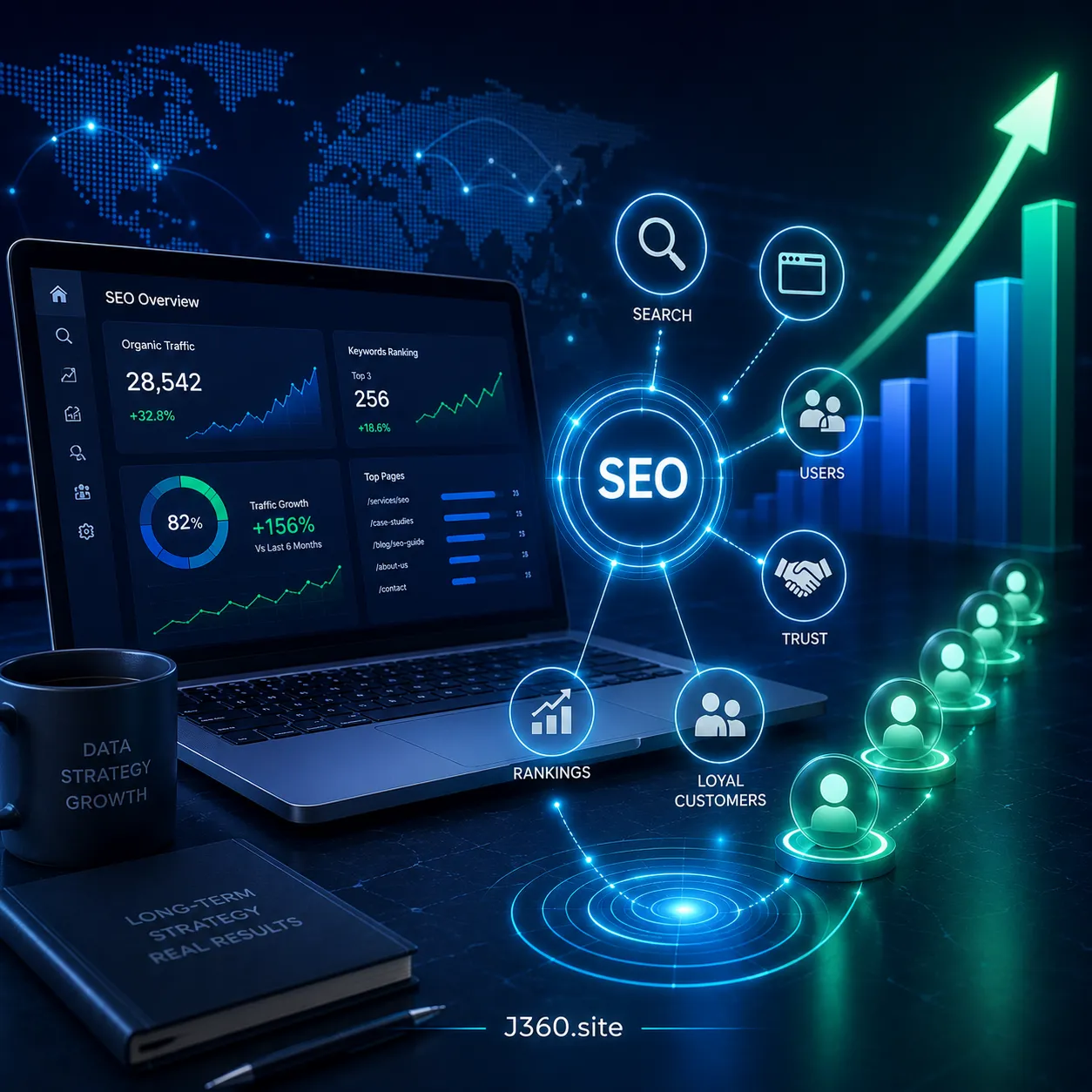
1.Introduction: Why SEO Is Essential for Long-Term Customer Growth
In the modern digital world, customers no longer rely only on traditional advertising or recommendations when choosing a business. The majority of buying decisions begin with an online search. Whether someone is looking for a service provider, comparing solutions, researching a product, or searching for expert advice, search engines have become one of the most important channels connecting businesses with potential customers.
For businesses that want sustainable growth, simply attracting visitors is not enough. The real goal is to attract the right customers—people who are actively searching for solutions and are more likely to build long-term relationships with a brand. This is where SEO for Business Growth becomes a powerful strategy for increasing visibility, generating qualified leads, and creating lasting customer relationships.
SEO for Business Growth helps companies improve their position in search engine results, allowing potential customers to discover their products and services naturally. Unlike paid advertising, where traffic stops as soon as the budget ends, SEO creates long-lasting digital value by improving website authority, increasing organic visibility, and generating a consistent flow of qualified visitors over time.
One of the biggest advantages of SEO is its ability to attract customers throughout the entire customer journey. Some users may begin by searching for educational information, while others may already be comparing providers or looking for a specific solution. By creating valuable content, optimizing website performance, and targeting relevant search terms, businesses can connect with potential customers at every stage of the decision-making process.
A strong SEO strategy goes far beyond achieving higher rankings on Google. It focuses on building trust, credibility, and brand authority. When a business consistently appears in search results and provides helpful information, customers begin to recognize it as a reliable source. This increased trust plays a crucial role in turning website visitors into loyal customers.
Another reason SEO is essential for long-term customer growth is its compounding effect. Every optimized webpage, informative article, technical improvement, and quality backlink contributes to a stronger online presence. Over time, these efforts build upon each other, helping businesses achieve greater visibility and attract more potential customers without relying entirely on continuous advertising expenses.
In contrast to short-term marketing tactics, SEO provides a foundation for sustainable customer acquisition. It helps businesses reduce their dependence on paid campaigns, improve customer engagement, increase conversion opportunities, and create a marketing channel that continues delivering value for years.
However, successful SEO requires a strategic and comprehensive approach. Businesses must focus on technical SEO, high-quality content creation, user experience optimization, keyword research, website performance, and continuous improvement to achieve meaningful results. Search engines constantly evolve, and companies that adapt their SEO strategies are the ones that maintain their competitive advantage.
At J360, we understand that SEO is not just about improving rankings—it is about helping businesses build a stronger digital presence and attract customers who provide long-term value. Through data-driven SEO strategies, professional website optimization, AI-powered solutions, and customer-focused content strategies, we help businesses create sustainable growth opportunities in an increasingly competitive online environment.
Ultimately, SEO is an investment in the future of your business. By improving your online visibility, building customer trust, and creating valuable experiences, SEO allows businesses to attract, engage, and retain customers for the long term. It transforms your website from a simple online presence into a powerful growth engine that continuously supports business success.
2.Why Long-Term Customers Are the Foundation of Business Growth
Every successful business shares one common characteristic: it doesn’t rely solely on acquiring new customers—it focuses on building lasting relationships with existing ones. While attracting new buyers is essential, long-term customers provide consistent revenue, stronger brand loyalty, and sustainable business growth. This is one of the main reasons why businesses invest in SEO, as it helps attract customers who continue engaging with a brand over time rather than making a single purchase and leaving.
Long-term customers are significantly more valuable than one-time buyers because they contribute to your business in multiple ways. They tend to make repeat purchases, spend more as trust grows, and often become brand advocates who recommend your products or services to friends, family, and colleagues. This type of organic promotion strengthens your reputation while reducing your overall marketing costs.
One of the biggest challenges businesses face is the increasing Customer Acquisition Cost (CAC). Paid advertising can generate quick traffic, but every click and every lead comes with a cost. Once the advertising budget is exhausted, traffic usually stops immediately. In contrast, SEO creates a continuous stream of organic traffic, allowing businesses to acquire new customers while lowering their dependence on expensive advertising campaigns.
Long-term customers also increase the overall Customer Lifetime Value (CLV) of your business. Instead of generating revenue from a single transaction, they continue purchasing products, renewing services, upgrading plans, or recommending your company to others. A higher CLV means each customer becomes more profitable over time, allowing your business to invest more confidently in growth and innovation.
Another major advantage of loyal customers is the trust they place in your brand. Modern consumers are more likely to buy from businesses they recognize and trust rather than unfamiliar competitors. Through consistent high-quality content, valuable educational resources, and positive online experiences, SEO helps establish your business as an authority in your industry. As trust increases, customers are more likely to return whenever they need a related product or service.
Search engines also reward websites that consistently provide value to users. By publishing relevant content that answers customer questions, solving real problems, and optimizing your website for the best user experience, you not only improve your rankings but also create stronger connections with your audience. These relationships often translate into higher retention rates, increased engagement, and long-term customer loyalty.
Businesses that prioritize long-term customer relationships are generally more resilient during economic fluctuations. Even when advertising budgets are reduced or market competition increases, a strong base of loyal customers continues generating revenue. Combined with a well-executed SEO strategy, this creates a stable marketing engine that consistently attracts qualified leads and nurtures them into repeat customers.
Ultimately, business growth is not measured only by how many new customers you gain, but by how many customers choose to stay with you. By focusing on long-term customer acquisition through SEO, businesses can reduce marketing costs, increase profitability, strengthen brand authority, and build a sustainable competitive advantage that delivers results for years to come.
3.What Makes SEO a Long-Term Marketing Investment?
Unlike many digital marketing strategies that produce short-term results, Search Engine Optimization (SEO) is designed to create lasting value for your business. Rather than paying for every visitor through advertising, SEO focuses on improving your website’s visibility in organic search results, allowing you to attract qualified traffic consistently over time. This is why SEO is widely regarded as one of the most cost-effective and sustainable marketing investments available.
One of the defining characteristics of SEO is its long-term return on investment (ROI). Paid advertising can deliver immediate traffic, but the results disappear as soon as your campaign ends or your advertising budget runs out. SEO works differently. Every improvement you make—whether it’s publishing high-quality content, optimizing page speed, improving technical performance, or earning authoritative backlinks—continues contributing to your website’s growth long after the work is completed.
SEO also benefits from a compounding effect. As your website gains authority, publishes more valuable content, and earns trust from search engines, each new optimization builds upon previous efforts. Instead of starting from scratch every month, your website becomes stronger over time, making it easier to rank for competitive keywords and attract even more qualified visitors. This continuous growth creates a powerful marketing asset that generates value for years.
Another reason SEO is considered a long-term investment is its ability to attract high-intent users. People who search on Google are actively looking for answers, products, or services. By ranking for relevant keywords, your business appears exactly when potential customers are ready to learn more or make a purchasing decision. This results in higher-quality leads, better conversion rates, and stronger customer relationships compared to many interruption-based advertising methods.
SEO is also an investment in your brand’s credibility and authority. Users naturally trust websites that appear at the top of search results because they associate higher rankings with expertise and reliability. By consistently creating informative content, answering customer questions, and providing an excellent user experience, your business establishes itself as a trusted resource within its industry. Over time, this trust translates into greater brand recognition and increased customer loyalty.
In addition to generating traffic, SEO improves many aspects of your website that directly influence business performance. Optimizing website speed, mobile responsiveness, site architecture, user experience (UX), and technical SEO not only helps search engines understand your website but also makes it easier for visitors to navigate, engage with your content, and complete desired actions. These improvements contribute to better conversion rates and long-term customer satisfaction.
One of the greatest strengths of SEO is that it creates evergreen marketing assets. A well-written blog post, comprehensive guide, or optimized landing page can continue attracting visitors months or even years after publication. As long as the content remains relevant and is updated when necessary, it can generate a steady stream of organic traffic without requiring continuous advertising spend. This makes SEO significantly more efficient over time than channels that rely on ongoing financial investment.
Furthermore, SEO adapts to every stage of the customer journey. Whether users are searching for educational information, comparing different solutions, reading reviews, or looking for a specific service provider, optimized content allows your business to appear throughout the decision-making process. This consistent visibility strengthens your brand presence and increases the likelihood that users will choose your business when they are ready to convert.
While SEO requires patience, strategy, and ongoing optimization, its long-term benefits far outweigh the initial investment. Businesses that commit to SEO build a reliable source of organic traffic, reduce their dependence on paid advertising, strengthen their online authority, and create a scalable marketing channel that continues delivering qualified leads and loyal customers year after year. Ultimately, SEO is not an expense—it is a long-term investment in sustainable business growth.
4.How SEO Helps Customers Discover Your Business Naturally
Today’s consumers rarely make a purchase without first searching online. Whether they are looking for information, comparing products, reading reviews, or searching for a trusted service provider, search engines are often the starting point of the customer journey. SEO ensures that your business appears in front of these potential customers at exactly the right moment—when they are actively searching for what you offer.
Unlike traditional advertising, which interrupts users with promotional messages, SEO attracts customers naturally. Instead of convincing people to click on an ad, SEO helps your website appear in organic search results for relevant keywords. This means visitors come to your website because they are genuinely interested in your products or services, making them far more likely to engage, convert, and become long-term customers.
The foundation of this process begins with keyword optimization. By identifying the search terms your target audience uses and creating valuable content around those topics, your website becomes more relevant to both users and search engines. Whether someone searches for “best web design agency,” “AI solutions for small businesses,” or “SEO services for eCommerce,” a well-optimized website has a much greater chance of appearing among the top search results.
SEO also helps businesses connect with customers throughout every stage of the buyer’s journey. Some users are searching for educational content to understand a problem, while others are comparing different providers or looking for immediate solutions. By publishing blog posts, service pages, case studies, FAQs, and informative guides, your website can answer customer questions at every stage, gradually building trust before a purchasing decision is made.
Another important factor is search intent. Modern SEO is no longer about simply inserting keywords into content. Search engines prioritize pages that best satisfy the user’s intent. Businesses that create relevant, informative, and user-focused content are rewarded with higher rankings because they provide genuine value. As a result, customers discover businesses that truly solve their problems instead of those relying solely on aggressive marketing.
Local SEO further enhances natural discovery for businesses serving specific geographic areas. When users search for services “near me” or include a city in their search, optimized Google Business Profiles, local citations, customer reviews, and location-specific landing pages help businesses appear prominently in local search results. This increases visibility among nearby customers who are ready to take action.
In addition to content, technical factors play a significant role in helping customers find your business. A fast-loading website, mobile-friendly design, secure HTTPS connection, clear site structure, and optimized metadata make it easier for search engines to crawl, index, and rank your pages. These improvements not only boost visibility but also create a better experience for visitors once they arrive on your website.
As your website continues publishing high-quality content and earning authoritative backlinks, its domain authority grows. Search engines become more confident in recommending your pages, allowing your business to rank for a wider range of competitive keywords. This creates a continuous flow of organic visitors without relying solely on paid advertising, making customer acquisition more predictable and cost-effective.
Perhaps the greatest advantage of SEO is that it allows customers to find your business instead of your business chasing customers. Because users actively initiate the search process, the traffic generated through SEO is highly relevant and often results in better engagement, stronger trust, and higher conversion rates. This natural discovery process lays the foundation for lasting customer relationships and sustainable business growth.
Ultimately, SEO transforms your website into a valuable resource that works around the clock. By aligning your content with user intent, optimizing your site’s technical performance, and consistently delivering helpful information, you create multiple opportunities for potential customers to discover your business organically. Over time, this continuous visibility strengthens your brand, expands your audience, and generates a reliable pipeline of qualified leads without the ongoing costs associated with traditional advertising.
5.Building Trust and Credibility Through Higher Search Rankings
In the digital marketplace, trust is one of the most influential factors in a customer’s buying decision. Before contacting a business or making a purchase, most users evaluate a company’s credibility by searching online. Businesses that consistently appear on the first page of Google are often perceived as more reliable, experienced, and authoritative than those buried deep in the search results. This is why higher search rankings do more than increase visibility—they build trust.
When users repeatedly see your website ranking for relevant searches, they begin to associate your brand with expertise. Even if they don’t click on your website during their first search, consistent exposure creates brand recognition, making them more likely to remember and trust your business in the future. This phenomenon, often referred to as the “mere exposure effect,” demonstrates how familiarity influences customer confidence and purchasing behavior.
Search engines like Google prioritize websites that provide the best possible experience for users. Websites that publish accurate, informative, and well-structured content, maintain strong technical performance, and demonstrate expertise are more likely to achieve higher rankings. As a result, users naturally assume that businesses ranking at the top have earned their position through quality and reliability.
One of the most effective ways SEO builds credibility is through high-quality content. Comprehensive blog posts, detailed service pages, industry guides, case studies, and frequently asked questions help educate potential customers while showcasing your knowledge. When your content consistently answers users’ questions and solves their problems, your business becomes a trusted source of information rather than just another company trying to make a sale.
Google also evaluates websites based on principles commonly known as Experience, Expertise, Authoritativeness, and Trustworthiness (E-E-A-T). Businesses that demonstrate real industry experience, publish expert-level content, earn reputable backlinks, and maintain accurate information are more likely to gain both higher rankings and greater customer trust. Investing in these areas not only improves SEO performance but also strengthens your brand’s reputation over time.
Customer reviews and testimonials further enhance credibility. Positive reviews, whether on your website, Google Business Profile, or other trusted platforms, provide social proof that reassures potential customers. When combined with strong search rankings, authentic customer feedback creates a powerful message: your business is trusted by both search engines and real clients.
Technical SEO also contributes to credibility. Features such as a secure HTTPS connection, fast loading speeds, mobile-friendly design, intuitive navigation, and a professional website layout all influence how visitors perceive your business. A slow, outdated, or difficult-to-use website can quickly undermine trust, regardless of how high it ranks in search results.
Another important factor is consistency. Businesses that regularly publish fresh content, update outdated information, and maintain an active online presence demonstrate commitment and professionalism. This consistency signals to both users and search engines that your business is active, reliable, and dedicated to providing ongoing value.
As your website earns authoritative backlinks from reputable industry websites, your credibility grows even further. These backlinks act as digital endorsements, signaling to search engines that other trusted sources recognize your content as valuable. Over time, this strengthens your domain authority and helps you compete for more competitive search terms while reinforcing customer confidence.
Ultimately, higher search rankings are not simply about attracting more visitors—they are about earning the trust that converts visitors into loyal customers. By combining high-quality content, technical excellence, authoritative backlinks, positive user experiences, and a strong reputation, SEO helps position your business as a credible industry leader. This trust becomes a long-term competitive advantage, encouraging customers to choose your brand over competitors and return whenever they need your products or services.
6.Targeting High-Intent Keywords That Drive Qualified Leads
Not all website visitors are equally valuable. While some users are simply looking for general information, others are actively searching for a product or service with the intention of making a purchase. One of the greatest advantages of SEO is its ability to target these high-intent keywords, helping businesses attract visitors who are far more likely to become qualified leads and paying customers.
High-intent keywords are search queries that indicate a user is close to making a decision. Instead of searching for broad terms like “what is SEO?”, a user searching for “SEO agency for small businesses”, “professional web design services”, or “AI automation solutions for companies” has a much clearer commercial intent. These users are actively looking for a solution, making them significantly more valuable than casual browsers.
Understanding search intent is the foundation of a successful SEO strategy. Search intent generally falls into four categories:
- Informational Intent – Users want to learn about a topic.
- Navigational Intent – Users are searching for a specific website or brand.
- Commercial Intent – Users are comparing products or services before making a purchase.
- Transactional Intent – Users are ready to take action, such as requesting a quote, booking a consultation, or making a purchase.
Businesses that optimize their websites for commercial and transactional keywords attract visitors who are already progressing through the buying journey, resulting in higher conversion rates and better marketing ROI.
Effective keyword targeting begins with thorough keyword research. Instead of focusing only on keywords with the highest search volume, successful SEO strategies prioritize keywords that match customer needs and business goals. A keyword with fewer monthly searches but stronger buying intent often generates more revenue than a broad keyword with thousands of low-quality visitors.
Another highly effective strategy is targeting long-tail keywords. These are longer, more specific search phrases that typically face lower competition while attracting highly qualified traffic. For example, instead of targeting the broad keyword “website design,” a business might optimize for “custom website design services for healthcare businesses” or “affordable eCommerce website design agency.” Although these keywords receive fewer searches, the visitors they attract are much closer to becoming customers.
Creating dedicated landing pages for high-intent keywords further improves conversion opportunities. Each landing page should focus on a specific service or customer need, providing clear information, compelling value propositions, trust signals, and strong calls-to-action (CTAs). This alignment between search intent and page content helps both search engines and users understand exactly what your business offers.
Content marketing also plays a critical role in capturing high-intent traffic. Publishing detailed service pages, comparison articles, pricing guides, case studies, product reviews, and solution-focused blog posts allows businesses to answer important customer questions while guiding users toward a purchasing decision. This strategy not only improves rankings but also nurtures potential customers throughout the buying process.
As search engines become increasingly sophisticated, they evaluate more than just keywords. Google analyzes content relevance, topical authority, user engagement, page experience, and overall content quality to determine which pages best satisfy user intent. Businesses that create genuinely helpful content instead of simply repeating keywords are more likely to achieve sustainable rankings and attract qualified leads.
Tracking keyword performance is equally important. Businesses should regularly monitor metrics such as organic traffic, click-through rate (CTR), conversion rate, bounce rate, lead quality, and keyword rankings. These insights help identify which keywords generate actual business results, allowing SEO strategies to evolve based on real performance rather than assumptions.
Ultimately, targeting high-intent keywords allows businesses to focus their marketing efforts on the people most likely to become customers. Instead of driving large amounts of untargeted traffic, SEO helps attract visitors who are actively searching for your solutions, increasing lead quality, improving conversion rates, and generating sustainable revenue growth. By aligning your content with user intent and optimizing for the right keywords, you create a powerful SEO strategy that consistently delivers qualified leads and long-term business success.
7.Creating Valuable Content That Keeps Customers Coming Back
Content is the foundation of every successful SEO strategy. While technical optimization and keyword research help search engines understand your website, valuable content is what attracts visitors, builds trust, and encourages customers to return again and again. Businesses that consistently publish helpful, relevant, and engaging content not only improve their search rankings but also create lasting relationships with their audience.
Modern SEO is no longer about producing content solely for search engines. Google’s algorithms prioritize people-first content that genuinely answers users’ questions, solves their problems, and provides a positive experience. Instead of creating articles just to rank for keywords, businesses should focus on delivering content that educates, informs, and supports potential customers throughout their buying journey.
One of the most effective ways to build customer loyalty is by becoming a trusted source of information. When users consistently find useful answers on your website, they begin to rely on your brand whenever they need advice, solutions, or industry insights. This trust encourages repeat visits, increases engagement, and makes customers more likely to choose your business when they are ready to make a purchase.
High-quality content comes in many forms. Businesses can create comprehensive blog posts, how-to guides, case studies, industry reports, tutorials, FAQs, comparison articles, videos, checklists, and downloadable resources. Offering a variety of content formats helps meet different user preferences while expanding your website’s topical authority across multiple search queries.
Another key strategy is creating evergreen content—content that remains valuable and relevant for months or even years after publication. Articles such as ultimate guides, best practices, industry fundamentals, and educational resources continue attracting organic traffic long after they are published. Regularly updating these pages with fresh information ensures they remain accurate, competitive, and useful for both users and search engines.
Content should also address every stage of the customer journey. At the awareness stage, educational articles help users understand their challenges. During the consideration stage, comparison guides, product reviews, and case studies assist in evaluating solutions. Finally, detailed service pages, pricing information, testimonials, and success stories help customers make confident purchasing decisions. Covering every stage increases the likelihood that users will return to your website whenever they need additional information.
Consistency is another essential factor in content marketing. Publishing high-quality content on a regular schedule signals to both users and search engines that your website is active and continuously providing value. Businesses that consistently update their blogs and resource centers often experience stronger organic growth than those that publish content only occasionally.
Creating valuable content also encourages natural backlink acquisition. When your articles provide unique insights, original research, or practical solutions, other websites are more likely to reference and link to your content. These high-quality backlinks strengthen your website’s authority, improve search rankings, and expand your online visibility without relying on paid promotion.
To maximize SEO performance, every piece of content should be optimized with relevant keywords, clear heading structures, compelling meta descriptions, internal links, optimized images, and readable formatting. However, optimization should never compromise the user experience. The primary goal is to create content that is easy to understand, enjoyable to read, and genuinely helpful.
Finally, valuable content keeps customers engaged beyond their first visit. Visitors who find useful information are more likely to bookmark your website, subscribe to your newsletter, follow your brand on social media, share your articles, and return whenever they need reliable information. These repeat interactions strengthen customer relationships and increase the likelihood of future conversions.
Ultimately, content is far more than a tool for improving search rankings—it is a long-term business asset. Every high-quality article, guide, or resource you publish strengthens your online authority, expands your organic reach, and builds trust with your audience. By consistently creating content that delivers real value, your business transforms its website into a destination that customers return to repeatedly, helping generate sustainable organic traffic, stronger brand loyalty, and long-term business growth.
8.The Role of Technical SEO in Long-Term Business Success
While high-quality content and keyword optimization are essential components of SEO, they cannot achieve their full potential without a strong technical foundation. Technical SEO ensures that search engines can efficiently crawl, index, and understand your website while providing visitors with a fast, secure, and seamless browsing experience. In many cases, even the best content will struggle to rank if technical issues prevent search engines from accessing or evaluating it properly.
Technical SEO focuses on optimizing the infrastructure of your website rather than its visible content. It includes improvements that help search engines discover your pages, interpret your website structure, and deliver the best possible experience to users. These optimizations create a solid foundation for sustainable organic growth and long-term business success.
One of the most important aspects of Technical SEO is website speed. Modern users expect websites to load within seconds, and even small delays can increase bounce rates and reduce conversions. Google also considers page speed a ranking factor because faster websites provide a better user experience. Optimizing images, minimizing unnecessary code, enabling browser caching, and using a reliable hosting provider all contribute to faster page loading times and improved SEO performance.
Equally important is mobile optimization. Since the majority of online searches now occur on smartphones and tablets, Google primarily evaluates websites using mobile-first indexing. A responsive design that adapts seamlessly to different screen sizes ensures visitors can easily browse your website regardless of the device they use. Businesses that neglect mobile usability risk losing both rankings and potential customers.
Proper website architecture also plays a critical role in long-term SEO success. A logical site structure, clear navigation, organized categories, and effective internal linking make it easier for both users and search engine crawlers to find important pages. Well-structured websites distribute authority more efficiently, improve crawlability, and encourage visitors to explore additional content, increasing engagement and reducing bounce rates.
Search engines rely on XML sitemaps and robots.txt files to understand which pages should be crawled and indexed. Keeping these files properly configured helps search engines discover new content quickly while preventing unnecessary pages from consuming crawl resources. Combined with regular indexing checks through tools like Google Search Console, these technical elements ensure your website remains accessible and visible in search results.
Another essential component of Technical SEO is implementing HTTPS security. A secure website protects user data, builds customer trust, and signals professionalism. Google has long considered HTTPS a ranking signal, making SSL certificates a basic requirement for businesses that want to compete effectively in search results. Visitors are also far more likely to trust websites that display secure connections.
Technical SEO also involves identifying and resolving crawl errors, broken links, duplicate content, and incorrect redirects. These issues can waste crawl budget, confuse search engines, and negatively impact user experience. Regular technical audits help identify problems before they affect rankings, ensuring your website remains healthy and fully optimized.
Modern SEO increasingly depends on structured data (Schema Markup). By adding structured data to your pages, you help search engines better understand your content and qualify for enhanced search features such as rich snippets, review stars, FAQs, product information, and event listings. These enhanced search results improve visibility and often increase click-through rates, driving more qualified traffic to your website.
Google also evaluates websites based on Core Web Vitals, a set of performance metrics that measure loading speed, visual stability, and user interaction. Websites that score well in these areas provide smoother experiences for users and are more likely to maintain strong search rankings. Improving Core Web Vitals not only benefits SEO but also increases user satisfaction and conversion rates.
Technical SEO is not a one-time task but an ongoing optimization process. Search engine algorithms continue to evolve, website technologies change, and user expectations grow. Regular monitoring, performance testing, and technical audits ensure your website remains competitive while preventing small issues from becoming major obstacles.
Ultimately, Technical SEO serves as the foundation of every successful SEO strategy. It allows search engines to efficiently access your content, improves user experience, strengthens website performance, and supports every other aspect of digital marketing. Businesses that invest in Technical SEO build websites that are faster, more secure, easier to navigate, and better equipped to generate consistent organic traffic. Over time, this strong technical foundation contributes to higher search rankings, increased customer trust, better conversion rates, and sustainable long-term business growth.
9.Why User Experience (UX) Matters for SEO and Customer Retention
A successful SEO strategy doesn’t end when a visitor clicks on your website. The real challenge begins once they arrive. If users encounter a slow-loading page, confusing navigation, poor mobile usability, or irrelevant content, they are likely to leave within seconds. This is why User Experience (UX) has become a critical factor in both SEO performance and long-term customer retention.
User Experience refers to how easily and comfortably visitors can interact with your website. It encompasses every aspect of the user’s journey, including website speed, navigation, page layout, mobile responsiveness, readability, accessibility, and the overall ease of finding information. A positive user experience encourages visitors to stay longer, explore more pages, and ultimately take meaningful actions such as requesting a quote, making a purchase, or contacting your business.
Search engines like Google prioritize websites that deliver excellent user experiences. Their goal is to provide users with the most relevant, helpful, and enjoyable results possible. As a result, websites that offer intuitive navigation, fast loading speeds, mobile-friendly designs, and high-quality content are more likely to achieve stronger search rankings than websites with poor usability.
One of the most influential UX factors is page speed. Users expect websites to load almost instantly, and even a delay of a few seconds can significantly increase bounce rates. Slow websites frustrate visitors, reduce engagement, and often lead users to return to search results in search of a better alternative. Optimizing images, reducing unnecessary scripts, and improving server performance help create a faster, smoother browsing experience.
Mobile usability has become equally important. With the majority of online searches now taking place on smartphones and tablets, businesses must ensure their websites perform flawlessly across all screen sizes. Responsive layouts, touch-friendly navigation, readable text, and fast mobile performance not only improve customer satisfaction but also align with Google’s mobile-first indexing, which primarily evaluates the mobile version of a website.
Clear and logical website navigation also plays a significant role in user experience. Visitors should be able to find information quickly without confusion or unnecessary clicks. Well-organized menus, descriptive headings, internal links, and a simple site structure help users move naturally through your website while also assisting search engines in understanding the relationship between your pages.
Another essential element of UX is content readability. Even the most informative article will fail to engage readers if it is difficult to scan or understand. Short paragraphs, descriptive headings, bullet points, relevant visuals, and simple language make content easier to consume. When visitors can quickly find the answers they need, they are more likely to remain on your website and continue exploring additional content.
User Experience also directly influences important SEO metrics such as bounce rate, average session duration, pages per session, and engagement. While Google does not use every engagement metric as a direct ranking factor, positive user behavior often indicates that a page satisfies search intent. Websites that consistently meet user expectations are more likely to maintain strong visibility in search results over time.
Beyond rankings, exceptional UX plays a vital role in customer retention. Visitors who enjoy a smooth and professional experience are more likely to return whenever they need additional information, products, or services. A website that is easy to use creates positive brand impressions, builds trust, and encourages long-term customer relationships. In contrast, frustrating user experiences can drive potential customers directly to competitors, regardless of how well your website ranks.
Accessibility is another increasingly important aspect of User Experience. Designing websites that accommodate users with disabilities through readable fonts, sufficient color contrast, keyboard navigation, descriptive image alt text, and screen-reader compatibility not only expands your audience but also demonstrates your commitment to inclusivity and professionalism.
An effective UX strategy also supports conversion optimization. Clear calls-to-action, intuitive contact forms, transparent pricing, trust signals, customer testimonials, and streamlined checkout processes remove friction from the customer journey. By making it easier for users to complete desired actions, businesses can improve both conversion rates and customer satisfaction.
Ultimately, SEO brings visitors to your website, but User Experience determines whether they stay, engage, and become loyal customers. A website that combines fast performance, intuitive navigation, valuable content, mobile optimization, and seamless usability creates lasting positive impressions that benefit both users and search engines. Investing in UX is not simply about improving website design—it is about creating meaningful customer experiences that increase trust, strengthen brand loyalty, improve search visibility, and support sustainable long-term business growth.
10.SEO vs. Paid Advertising: Which Delivers Better Long-Term Results?
Businesses looking to grow online often face an important question: Should you invest in SEO or paid advertising? Both strategies can drive traffic, generate leads, and increase sales, but they work in fundamentally different ways. Understanding their strengths and limitations is essential for building a marketing strategy that supports long-term business growth.
Search Engine Optimization (SEO) focuses on improving your website’s visibility in organic search results. Through keyword optimization, high-quality content, technical improvements, and authority building, SEO helps your business attract visitors naturally without paying for every click. Although SEO requires time and consistent effort, the results often continue long after the initial investment.
Paid advertising, such as Google Ads or social media advertising, delivers immediate visibility by placing your business in front of a targeted audience. Businesses can launch campaigns within hours and begin receiving traffic almost instantly. This makes paid advertising an excellent choice for product launches, seasonal promotions, limited-time offers, or businesses that need immediate lead generation.
The biggest difference between the two strategies lies in sustainability. Paid advertising follows a simple model: when you stop paying, the traffic stops. Every visitor comes at a cost, and increasing traffic usually requires increasing your advertising budget. SEO works differently. Once your website achieves strong rankings, it can continue attracting qualified visitors for months or even years with ongoing optimization and content updates.
Another important consideration is Return on Investment (ROI). While paid advertising often produces faster results, SEO typically generates a higher long-term ROI because organic traffic does not require payment for each click. Every optimized page becomes a long-term digital asset capable of attracting new visitors continuously. As your website gains authority, the cost of acquiring each customer through organic search generally decreases over time.
User behavior also plays a significant role in comparing these marketing channels. Many internet users naturally trust organic search results more than paid advertisements. Because organic rankings are earned rather than purchased, they often carry greater credibility. Visitors arriving through organic search frequently perceive businesses as more authoritative, increasing the likelihood of engagement and conversion.
SEO also excels at building brand authority. Publishing educational articles, comprehensive guides, case studies, and helpful resources positions your business as an industry expert. This ongoing content creation strengthens customer trust while expanding your visibility across hundreds or even thousands of relevant search queries. Paid advertising, by contrast, primarily focuses on promoting individual offers rather than establishing long-term authority.
One of SEO’s greatest advantages is its compounding growth. Every new blog post, optimized service page, quality backlink, and technical improvement contributes to your website’s overall authority. Over time, these efforts reinforce one another, making it easier to rank for increasingly competitive keywords. Paid advertising does not offer this cumulative benefit—each campaign typically starts from zero and depends entirely on available budget.
However, paid advertising still has significant advantages in specific situations. Businesses entering highly competitive markets, launching new products, testing marketing messages, or targeting highly specific audiences can benefit greatly from paid campaigns. Advertising also provides immediate performance data, allowing marketers to evaluate keywords, audiences, and conversion rates quickly.
The most successful businesses rarely choose SEO or paid advertising exclusively. Instead, they combine both strategies to maximize results. Paid advertising generates immediate traffic and leads while SEO builds sustainable organic visibility for the future. For example, a company may use Google Ads to promote a new service while simultaneously investing in SEO to rank organically for the same keywords over the coming months. As organic rankings improve, dependence on paid advertising gradually decreases.
Choosing between SEO and paid advertising ultimately depends on your business goals, budget, competition, and timeline. If your objective is fast visibility, paid advertising can deliver immediate results. If your goal is long-term customer acquisition, lower marketing costs, stronger brand authority, and sustainable growth, SEO is the more strategic investment.
Ultimately, the strongest digital marketing strategies recognize that SEO and paid advertising are not competitors—they are complementary tools. Paid campaigns can generate short-term momentum, while SEO builds a lasting foundation that continues producing qualified traffic, leads, and customers long after the ads have stopped running. For businesses focused on long-term success, SEO provides the stability, credibility, and compounding growth that paid advertising alone cannot achieve.
11.Common SEO Mistakes That Cost You Long-Term Customers
Achieving long-term SEO success requires more than simply publishing content or adding keywords to your website. Many businesses invest significant time and resources into SEO but fail to see sustainable results because they overlook critical mistakes that negatively impact both search engine rankings and customer experience. These errors not only reduce organic visibility but can also drive potential customers directly to competitors.
One of the most common mistakes is targeting the wrong keywords. Many businesses focus exclusively on high-volume search terms without considering user intent. Ranking for a broad keyword may generate traffic, but if visitors are not actively looking for your products or services, they are unlikely to convert into customers. Successful SEO focuses on relevant, high-intent keywords that align with the needs and goals of your target audience.
Another major mistake is creating low-quality or thin content. Search engines prioritize websites that provide valuable, comprehensive, and original information. Publishing short articles with little substance, duplicating content from other websites, or producing content solely to target keywords rarely delivers long-term results. Businesses should instead create content that answers real questions, solves customer problems, and demonstrates genuine expertise.
Many websites also overlook the importance of Technical SEO. Slow loading speeds, broken links, duplicate pages, crawl errors, poor mobile performance, missing XML sitemaps, and indexing issues can prevent search engines from properly understanding your website. Even outstanding content may struggle to rank if technical problems reduce your site’s accessibility or performance.
Ignoring mobile optimization is another costly mistake. With the majority of searches now occurring on mobile devices, users expect websites to load quickly and function seamlessly on smartphones and tablets. A website that is difficult to navigate on mobile devices often experiences higher bounce rates, lower engagement, and reduced conversions, all of which can negatively impact long-term SEO performance.
Some businesses still rely on outdated practices such as keyword stuffing. Repeating the same keyword unnaturally throughout a page no longer improves rankings. Instead, it creates a poor reading experience and may even trigger search engine penalties. Modern SEO emphasizes natural language, semantic relevance, and content that genuinely satisfies user intent rather than excessive keyword repetition.
Another frequently overlooked issue is neglecting User Experience (UX). A confusing website layout, complicated navigation, intrusive pop-ups, poor readability, or unclear calls-to-action can frustrate visitors and cause them to leave before taking any meaningful action. SEO is not only about attracting visitors—it is also about providing an experience that encourages them to stay, explore, and convert.
Failing to build high-quality backlinks is another obstacle to long-term growth. Backlinks remain one of the strongest indicators of website authority. However, businesses sometimes pursue low-quality or spammy links in an attempt to manipulate rankings. These tactics often produce the opposite effect, damaging credibility and increasing the risk of search engine penalties. A sustainable backlink strategy focuses on earning links naturally through valuable content and reputable industry relationships.
Many companies also make the mistake of publishing content and never updating it. Information becomes outdated, statistics change, and search intent evolves over time. Regularly refreshing existing articles with updated data, improved explanations, additional examples, and new keywords helps maintain relevance and preserve search rankings. Content maintenance is just as important as content creation.
Another common oversight is failing to measure SEO performance effectively. Businesses that only monitor keyword rankings often miss the bigger picture. Important metrics such as organic traffic, conversion rate, click-through rate (CTR), bounce rate, average engagement time, qualified leads, and customer acquisition provide far more meaningful insights into the success of an SEO strategy. Data-driven decision-making allows businesses to continuously improve their performance.
Some organizations also expect immediate results from SEO. Unlike paid advertising, SEO is a long-term strategy that requires patience and consistent optimization. Businesses that abandon SEO after only a few months often miss the compounding benefits that develop over time. Sustainable rankings are built through continuous improvements rather than quick fixes.
Finally, one of the biggest mistakes is treating SEO as a one-time project instead of an ongoing business strategy. Search engine algorithms evolve, competitors continue optimizing their websites, and customer behavior constantly changes. Businesses that stop investing in SEO eventually lose visibility to competitors who continue improving their websites and content.
Avoiding these common mistakes allows businesses to build a stronger online presence, improve customer trust, and generate consistent organic growth. By focusing on high-quality content, technical excellence, user experience, ethical optimization practices, and continuous improvement, companies can transform SEO into a reliable source of qualified leads and loyal customers. In the long run, businesses that commit to sustainable SEO practices are far better positioned to achieve lasting visibility, stronger brand authority, and continued business success.
12.How to Measure SEO Success Beyond Rankings
Many businesses judge the success of their SEO strategy solely by looking at keyword rankings. While ranking on the first page of Google is certainly important, it is only one piece of the puzzle. A website can rank highly for dozens of keywords but still fail to generate meaningful business results. The true purpose of SEO is not simply to improve visibility—it is to increase qualified traffic, generate leads, boost conversions, and drive long-term business growth.
A more effective way to evaluate SEO performance is by measuring business-focused metrics that reflect how users interact with your website and how those interactions contribute to your company’s goals. These metrics provide a clearer understanding of whether your SEO strategy is delivering real value.
One of the most important indicators is Organic Traffic. This measures the number of visitors who find your website through unpaid search results. Steady growth in organic traffic often indicates that your content is becoming more visible, your website is gaining authority, and your SEO efforts are reaching a wider audience. However, traffic alone is not enough—it must also be relevant and qualified.
The quality of your visitors is just as important as the quantity. Tracking Qualified Leads helps determine whether your website is attracting people who are genuinely interested in your products or services. Metrics such as contact form submissions, consultation requests, quote requests, demo bookings, phone calls, and newsletter sign-ups provide valuable insight into how effectively SEO is generating potential customers.
Another critical metric is the Conversion Rate. This measures the percentage of visitors who complete a desired action after arriving on your website. Whether the goal is making a purchase, requesting a consultation, downloading a resource, or filling out a contact form, a growing conversion rate indicates that your website is successfully turning organic visitors into customers.
Businesses should also monitor Click-Through Rate (CTR) from search results. CTR measures how often users click on your website after seeing it in Google Search. Strong title tags, compelling meta descriptions, and relevant content can significantly improve CTR, allowing your website to attract more visitors without necessarily improving rankings.
User engagement metrics provide additional insight into content quality and website performance. Metrics such as Average Engagement Time, Pages per Session, and Bounce Rate help determine whether visitors find your content useful and engaging. When users spend more time exploring your website and visiting multiple pages, it often signals that your content successfully satisfies their search intent.
For businesses focused on long-term growth, Customer Lifetime Value (CLV) is another valuable measurement. SEO should not only generate one-time sales but also attract customers who return, make repeat purchases, and recommend your business to others. A higher CLV demonstrates that your SEO strategy is attracting customers who provide lasting value rather than short-term revenue.
Tracking Branded Search Volume is another effective way to measure growing brand awareness. When more users begin searching directly for your company name or brand, it indicates that your SEO efforts are increasing recognition and trust. Strong brands typically experience higher branded search volume because customers actively seek them out rather than discovering them accidentally.
Monitoring your website’s Backlink Profile is equally important. High-quality backlinks from reputable websites strengthen your domain authority and improve your ability to rank for competitive keywords. Rather than focusing solely on the number of backlinks, businesses should evaluate the quality, relevance, and diversity of referring domains.
Technical performance should also be part of every SEO measurement strategy. Regularly reviewing Core Web Vitals, page speed, mobile usability, crawl errors, indexing status, and website security helps ensure that technical issues do not limit organic growth. A technically healthy website provides a better experience for both users and search engines.
Businesses should also measure the growth of their Topical Authority. As you publish comprehensive, interconnected content around your industry, your website becomes a trusted resource for a broader range of search queries. Increasing visibility across multiple related keywords demonstrates that your website is building authority rather than relying on rankings for just a few isolated terms.
To gain the most accurate picture of SEO performance, businesses should use tools such as Google Analytics 4 (GA4), Google Search Console, and professional SEO platforms to monitor trends over time. These tools help identify which pages generate the most traffic, which keywords drive conversions, and where new optimization opportunities exist.
Ultimately, SEO success is measured by business growth—not just search rankings. Higher rankings are valuable only when they lead to increased visibility, qualified traffic, stronger customer engagement, more conversions, and sustainable revenue. By focusing on meaningful performance indicators instead of vanity metrics, businesses can make smarter decisions, continuously refine their SEO strategies, and build a long-term marketing engine that consistently delivers measurable results.
13.Why Businesses Trust Jarvis360 for Sustainable SEO Growth
Achieving long-term success with SEO requires more than optimizing a few keywords or publishing occasional blog posts. It demands a strategic approach that combines technical expertise, high-quality content, data-driven decision-making, and a deep understanding of how search engines and users interact. At Jarvis360, we help businesses build sustainable SEO strategies that generate consistent organic traffic, qualified leads, and measurable business growth.
Our philosophy is simple: SEO should be an investment that continues delivering value long after the initial work is completed. Instead of focusing on short-term ranking gains or outdated optimization techniques, we develop customized strategies designed to strengthen your online presence, improve your website’s authority, and create lasting competitive advantages.
Every successful SEO campaign begins with understanding your business. At Jarvis360, we take the time to learn about your industry, target audience, competitors, and business objectives before developing a personalized SEO roadmap. This allows us to identify the most valuable opportunities for growth and prioritize strategies that deliver real business results rather than vanity metrics.
Our approach combines every essential aspect of modern SEO. We perform comprehensive keyword research to identify high-intent search opportunities, optimize website architecture through Technical SEO, create valuable content that addresses customer needs, improve internal linking structures, and implement advanced on-page optimization techniques that help search engines better understand your website.
Content plays a central role in every SEO strategy we develop. Our team creates people-first, search-optimized content that not only ranks well but also educates, engages, and converts visitors into customers. From informative blog articles and service pages to industry guides and landing pages, every piece of content is designed to strengthen your authority while supporting long-term organic growth.
Technical excellence is another key reason businesses choose Jarvis360. We continuously optimize website performance by improving page speed, Core Web Vitals, mobile responsiveness, crawlability, indexing, structured data, and overall site health. These improvements create a stronger technical foundation that supports higher rankings and delivers a better experience for every visitor.
We also recognize that SEO does not exist in isolation. That’s why Jarvis360 integrates SEO with professional website design, AI-powered solutions, and digital marketing strategies that work together to maximize business performance. A visually appealing website, intuitive user experience, and intelligent automation all contribute to higher engagement, stronger conversion rates, and greater customer satisfaction.
Unlike agencies that focus only on rankings, Jarvis360 measures success through meaningful business outcomes. We monitor organic traffic growth, qualified leads, conversion rates, customer engagement, and return on investment to ensure every SEO campaign contributes directly to your company’s long-term objectives. Our reporting is transparent, data-driven, and focused on metrics that matter most to your business.
SEO is constantly evolving, and so are we. Google’s algorithms, user behavior, and industry trends continue to change, which is why our team stays up to date with the latest best practices and emerging technologies. Through continuous optimization, performance monitoring, and strategic refinement, we help clients maintain strong visibility even in highly competitive markets.
Transparency and collaboration are at the heart of every partnership we build. We believe clients should understand what we’re doing, why we’re doing it, and how it impacts their business. By maintaining clear communication and providing actionable insights, we create long-term relationships based on trust, accountability, and shared success.
Whether you’re a startup looking to establish your online presence, a growing business aiming to generate more qualified leads, or an established company seeking to expand into new markets, Jarvis360 provides the expertise and strategic guidance needed to achieve sustainable growth. Our mission is not simply to improve rankings—it is to help businesses build stronger brands, attract loyal customers, and create a scalable digital presence that delivers measurable results for years to come.
At Jarvis360, we believe that successful SEO is built on strategy, quality, consistency, and continuous improvement. By combining technical excellence, exceptional content, advanced AI solutions, and a results-driven mindset, we help businesses transform their websites into powerful growth engines that attract long-term customers and support sustainable business success.
14.Future SEO Trends That Will Shape Customer Acquisition
Search engine optimization is constantly evolving. As search engines become smarter and user behavior changes, businesses must adapt their SEO strategies to remain competitive. Companies that stay ahead of emerging trends are better positioned to attract high-quality customers, strengthen their online visibility, and maintain sustainable growth. Understanding the future of SEO is no longer optional—it’s essential for long-term customer acquisition.
One of the most significant trends shaping SEO is the growing influence of Artificial Intelligence (AI). Search engines are increasingly using AI to better understand user intent, evaluate content quality, and deliver more relevant search results. This means businesses can no longer rely on outdated optimization techniques or keyword-heavy content. Instead, they must create helpful, original, and experience-driven content that genuinely answers users’ questions and solves real problems.
Another major trend is the continued shift toward search intent optimization. Modern search engines focus less on matching exact keywords and more on understanding what users actually want to accomplish. Businesses that create content aligned with informational, commercial, and transactional intent will have a greater chance of attracting qualified visitors who are ready to engage or make a purchase.
The importance of Topical Authority will also continue to grow. Rather than ranking individual pages based on isolated keywords, search engines increasingly reward websites that demonstrate comprehensive expertise within a specific subject area. Businesses should focus on building interconnected content clusters that thoroughly cover their industry, helping establish themselves as trusted authorities in their niche.
Voice Search is becoming another influential factor in customer acquisition. With the growing popularity of smart speakers and voice assistants, more users are searching using natural, conversational language. Optimizing content for long-tail keywords, question-based queries, and conversational phrases helps businesses reach users who rely on voice-enabled devices to find products and services.
At the same time, visual search continues to expand. Users are increasingly searching with images rather than text through platforms and mobile technologies. Businesses that optimize images with descriptive file names, alt text, structured data, and high-quality visuals improve their chances of appearing in image search results and reaching new audiences.
User experience will remain a critical ranking factor. Search engines increasingly evaluate websites based on Core Web Vitals, mobile usability, accessibility, loading speed, and overall engagement. Businesses that invest in creating fast, secure, and user-friendly websites will be better equipped to retain visitors and convert them into loyal customers.
Another important trend is the growing emphasis on Experience, Expertise, Authoritativeness, and Trustworthiness (E-E-A-T). Search engines increasingly favor content created by businesses and professionals with real-world knowledge and proven expertise. Publishing accurate information, showcasing case studies, highlighting customer success stories, and demonstrating industry experience all contribute to stronger credibility and improved search visibility.
Local SEO will continue to play a crucial role for businesses serving specific geographic markets. As users increasingly search for nearby services and businesses, optimizing Google Business Profiles, earning positive customer reviews, maintaining consistent local citations, and creating location-specific content will remain essential for attracting local customers.
Search engines are also placing greater importance on structured data (Schema Markup). Websites that implement structured data help search engines better understand their content and become eligible for enhanced search features such as rich snippets, FAQs, reviews, product information, and other rich results. These enhanced listings increase visibility and improve click-through rates by making search results more informative and engaging.
The future of SEO also involves deeper integration with AI-powered search experiences. As AI-generated summaries and conversational search interfaces become more common, businesses must focus on creating authoritative, trustworthy, and well-structured content that search engines can confidently reference. Content that demonstrates originality, depth, and practical value will be more likely to remain visible in these evolving search environments.
Another emerging priority is content freshness. Search engines increasingly favor websites that regularly update existing content, refresh outdated information, and respond to changes within their industry. Businesses that continuously improve their content rather than simply publishing new articles will maintain stronger rankings and remain relevant to both users and search engines.
Data-driven decision-making will become even more valuable in the years ahead. Businesses will increasingly rely on analytics, user behavior insights, and SEO performance metrics to refine their strategies. Monitoring organic traffic, engagement, conversion rates, search intent trends, and customer behavior enables continuous optimization and more effective customer acquisition.
Ultimately, the future of SEO is centered on creating exceptional experiences for users rather than simply optimizing for algorithms. Businesses that prioritize valuable content, technical excellence, user satisfaction, topical authority, and continuous innovation will be the ones that attract the most qualified customers in an increasingly competitive digital landscape.
As search technology continues to evolve, companies that embrace these emerging SEO trends will build stronger online visibility, increase customer trust, and create sustainable growth opportunities. By investing in forward-thinking SEO strategies today, businesses can position themselves to acquire more customers, strengthen their brand authority, and remain competitive for years to come.
15.Conclusion
In today’s competitive digital environment, attracting and retaining customers requires more than short-term marketing campaigns. Businesses need strategies that create consistent value, build trust, and generate sustainable growth over time. SEO is one of the most powerful long-term marketing investments because it helps businesses connect with customers at the exact moment they are searching for solutions.
Unlike traditional advertising methods that depend on continuous spending, SEO creates a lasting digital foundation. Through high-quality content, technical optimization, improved user experience, strategic keyword targeting, and authority building, businesses can increase their online visibility and attract qualified customers consistently. Every optimized page, valuable resource, and SEO improvement contributes to long-term growth and creates an asset that continues delivering results.
The true power of SEO goes beyond achieving higher rankings. Successful SEO helps businesses build credibility, brand recognition, customer trust, and stronger relationships with their audience. When users repeatedly find helpful information, positive experiences, and reliable solutions from your website, they are more likely to choose your brand, return in the future, and recommend your services to others.
However, sustainable SEO success requires a strategic and continuous approach. Search algorithms evolve, customer expectations change, and competition continues to increase. Businesses that treat SEO as an ongoing investment rather than a one-time task are better positioned to maintain visibility, adapt to market changes, and achieve long-term success.
At J360, we help businesses develop customized SEO strategies designed for sustainable growth. By combining technical SEO expertise, data-driven strategies, valuable content creation, AI-powered solutions, and professional website optimization, we help companies improve their online presence and transform their websites into powerful customer acquisition engines.
The future of digital growth belongs to businesses that focus on providing real value to their customers. By investing in SEO today, companies can reduce their dependence on paid advertising, attract more qualified leads, strengthen their brand authority, and build a reliable source of long-term business growth.
Ultimately, SEO is not just about getting more website visitors—it is about attracting the right customers, building lasting relationships, and creating a digital presence that continues working for your business for years to come.