
1. Introduction: Why Website Traffic Doesn’t Always Lead to More Customers
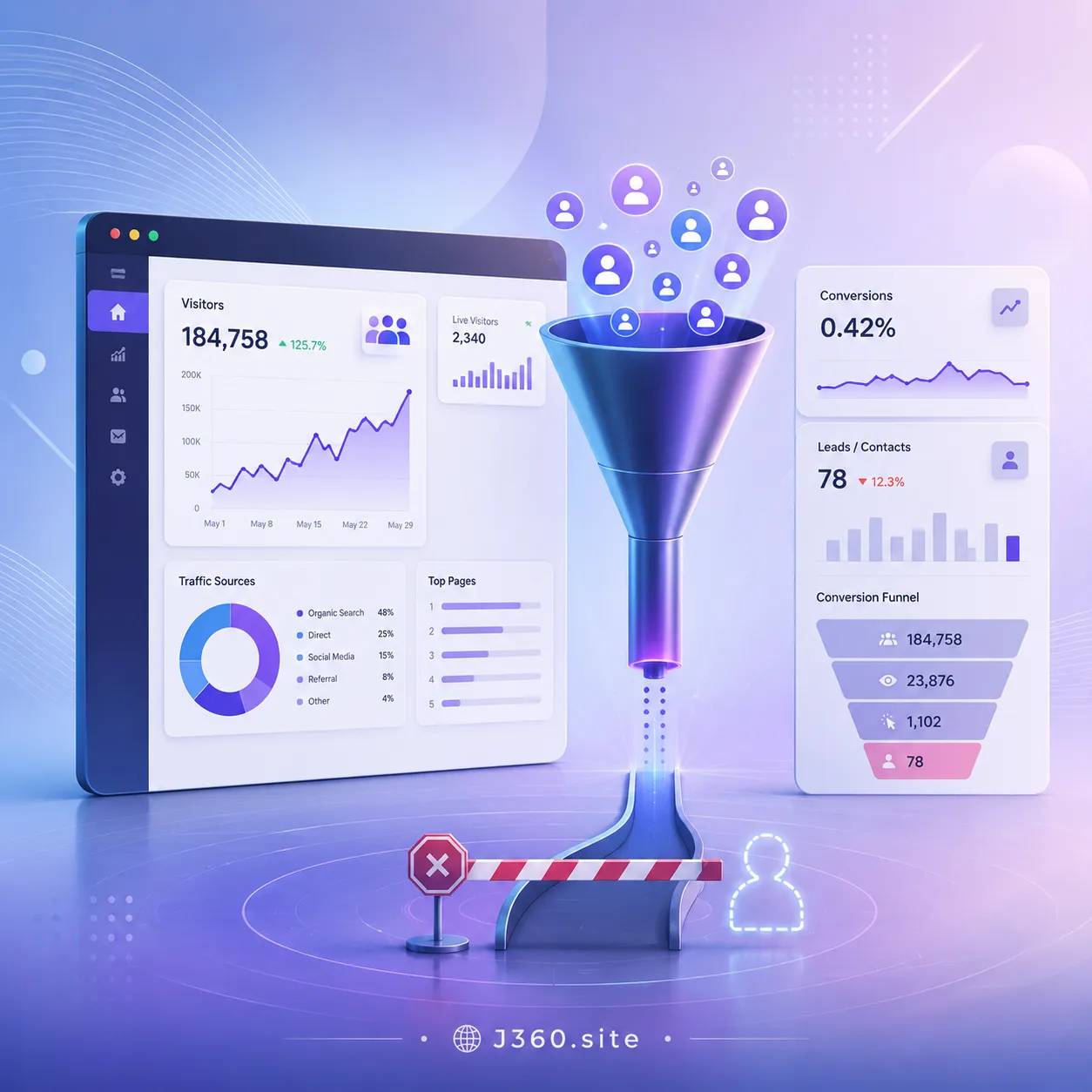
Website traffic but no leads is a frustrating problem for many businesses. You may be investing in SEO, content marketing, social media, paid advertising, or other digital marketing strategies and successfully bringing hundreds or even thousands of visitors to your website every month.
But what happens after they arrive?
If your website is getting traffic but very few visitors are filling out your contact form, requesting a quote, booking a consultation, or making a purchase, the problem may not be your traffic. The real problem could be what happens between the first visit and the desired action.
Think of your website as more than an online brochure. It should guide visitors from interest to trust and from trust to action. If visitors cannot quickly understand what you offer, find the information they need, trust your business, or figure out what to do next, they may simply leave—even if your website is attracting the right audience.
This is why more website traffic does not automatically mean more customers.
A website can rank well on Google, attract relevant visitors, and still generate disappointing results because of issues such as poor user experience, unclear messaging, weak calls-to-action, slow loading times, complicated forms, or a lack of trust signals.
The good news is that these problems can often be identified and fixed.
In this guide, we’ll look at the most common reasons why a website gets traffic but fails to generate leads. More importantly, you’ll learn practical changes you can make to turn more of your existing visitors into qualified leads and real business opportunities—without simply relying on getting more traffic.
2. Traffic vs. Leads: Understanding the Difference
Website traffic and leads are closely connected, but they are not the same thing. Understanding the difference is essential if you want to know whether your website is actually helping your business grow.
Website traffic refers to the people who visit your website. They may arrive through Google search results, social media, paid ads, referral links, or by typing your website address directly into their browser. Traffic tells you how many people are visiting your website, but it does not tell you how valuable those visitors are.
A lead, on the other hand, is a visitor who shows genuine interest in your business and takes a meaningful action. This could include submitting a contact form, requesting a quote, booking a consultation, signing up for a service, or contacting your sales team.
For example, imagine that 10,000 people visit your website in a month, but only 10 people contact you. Your website may appear successful when looking at traffic numbers, but the actual business result is relatively weak.
Now imagine another website receives only 2,000 visitors but generates 100 qualified inquiries. The second website may be creating far more business value from significantly less traffic.
This is why businesses should not focus on traffic alone. The real question is:
Are you attracting the right people, and does your website give them a clear reason to take the next step?
A successful website needs both qualified traffic and an effective conversion process. SEO can bring the right visitors to your website, but your design, messaging, content, trust signals, and calls-to-action determine what happens after they arrive.
If your traffic is healthy but your leads are low, it is time to look beyond your analytics dashboard and examine the conversion experience your website provides.
3. Is Your Website Attracting the Right Audience?
One of the most common reasons a website gets plenty of traffic but generates very few leads is simple: the visitors may not be the right people for your business.
High traffic numbers can look impressive, but traffic only becomes valuable when it comes from people who are actually interested in your products or services. If your website attracts visitors who have no intention of buying, requesting a service, or contacting your business, even excellent web design and strong calls-to-action may not produce the results you expect.
This problem often starts with your SEO strategy and keyword targeting.
For example, suppose you run a web design agency that works with small and medium-sized businesses. If your content mainly targets broad searches such as “how to make a website,” you may attract students, beginners, or people looking for free tutorials. These visitors can increase your traffic while generating very few business inquiries.
Instead, targeting more relevant searches such as “professional web design for small businesses” or “web design agency for local businesses” can attract visitors who are much closer to making a purchasing decision.
Your content should therefore match the search intent of your ideal customer.
Ask yourself:
- Who are you trying to attract?
- What problems are they trying to solve?
- What keywords are they searching for?
- Does your content match their actual needs?
- Are your visitors at the right stage of the buying journey?
You should also review your analytics to identify which traffic sources, keywords, pages, and audiences generate actual leads, rather than simply measuring total visitors.
The goal is not to get the highest possible number of visitors. The goal is to attract qualified visitors who have a genuine reason to choose your business.
When the right audience reaches the right page with the right message, converting traffic into leads becomes much easier.
4. Your Visitors May Not Find What They’re Looking For
Even if your website attracts the right audience, visitors can still leave without becoming leads if they cannot quickly find the information they need.
People rarely visit a business website with unlimited time and patience. They usually arrive with a specific question, problem, or goal. They want to understand what you offer, how it can help them, and what they should do next. If your website makes this process difficult, they may leave and look for another business.
One common problem is a mismatch between the visitor’s expectations and the page content.
For example, someone may click a Google search result expecting to learn about professional SEO services, but the page they land on may contain a generic introduction to digital marketing. The visitor then has to search through multiple sections to find the information they originally wanted.
That creates unnecessary friction.
Your website should make important information easy to discover. Visitors should be able to quickly understand:
- What your business does
- Who your services are for
- What problem you can solve
- Why they should choose you
- What action they should take next
Your website structure also matters. Clear navigation, descriptive headings, relevant internal links, and well-organized service pages can help visitors move naturally from one piece of information to another.
You should also make sure that each important page has a clear purpose. A service page should explain the service and encourage an appropriate next step. A blog post should answer the visitor’s question while naturally guiding interested readers toward relevant services or resources.
The key is to stop thinking about your website from the perspective of the business owner and start viewing it from the visitor’s perspective.
If someone lands on your website for the first time, can they immediately understand “What’s in it for me?”
If the answer is unclear, you may be losing potential leads before they ever have a chance to contact you.
5. How Website Design and User Experience Affect Conversions
Your website may have excellent content and steady traffic, but if the design and user experience make it difficult to navigate, visitors may leave before taking any meaningful action.
Good website design is not simply about making a website look modern or attractive. Its real purpose is to make the visitor’s journey clear, simple, and friction-free. Every page should help users understand where they are, what they can do, and where they should go next.
One of the first things to evaluate is your website’s visual hierarchy. Important information should stand out immediately. Your headline, value proposition, primary CTA, and key benefits should not be buried beneath large blocks of text or unnecessary design elements.
Navigation is equally important. If visitors have to click through several pages just to find your services, pricing information, contact details, or other essential information, you are creating unnecessary friction.
Your website should also be easy to use on mobile devices. A large portion of website traffic comes from smartphones, and a page that looks good on a desktop can still provide a frustrating mobile experience. Buttons that are difficult to tap, text that is too small, slow-loading pages, or forms that are uncomfortable to complete can quickly cost you potential leads.
Another important factor is page speed. Visitors are less likely to wait around for a slow website when competitors are only one search away. Compressing images, reducing unnecessary scripts, using reliable hosting, and optimizing your website’s technical performance can help create a faster experience.
You should also remove elements that distract visitors from the main goal. Too many pop-ups, competing CTAs, excessive animations, or confusing layouts can make it harder for users to decide what to do.
A useful test is to ask someone unfamiliar with your business to visit your homepage for a few seconds and answer three questions:
What does this business offer? Who is it for? What should I do next?
If they cannot answer these questions easily, your website may have a conversion problem rather than a traffic problem.
Ultimately, effective web design should do more than impress visitors. It should guide them toward taking action.
6. Does Your Website Clearly Explain What You Offer?
A visitor should not have to work hard to understand what your business does or why they should choose you. Yet unclear messaging is one of the most overlooked reasons websites receive traffic without generating enough leads.
When someone lands on your homepage or service page, you have only a short amount of time to communicate your value. If your headline is vague, your services are difficult to understand, or your content focuses too much on what your company does rather than how you help customers, visitors may lose interest and leave.
For example, a headline such as “Innovative Digital Solutions for Modern Businesses” may sound professional, but it does not clearly tell visitors what you actually provide. A more specific message can immediately communicate the service, target audience, and benefit.
Your website should make several things obvious:
- What do you offer?
- Who do you help?
- What problem do you solve?
- What makes your solution different?
- What should the visitor do next?
Your value proposition should appear prominently on important pages, especially your homepage and key service pages. Avoid filling the first section with complicated industry terminology or generic marketing statements. Clear and specific messaging usually works better than impressive-sounding but vague language.
You should also organize your services logically. If you offer multiple solutions, such as web design, SEO, AI services, or digital marketing, each service should have enough dedicated information for visitors to understand its purpose, benefits, and potential outcomes.
Another important improvement is to focus on customer outcomes rather than just features. Instead of simply explaining that your service includes certain technical features, explain how those features can help solve a business problem.
Your website should answer the visitor’s most important question as quickly as possible:
“How can this business help me?”
When your message is clear, relevant, and focused on customer needs, visitors can make decisions with less effort—and that makes it much easier to turn website traffic into qualified leads.
7. Your Calls-to-Action Might Be Too Weak or Confusing
Getting visitors to your website is only the first step. Once they are interested in your business, they need a clear next step. This is where your calls-to-action (CTAs) become important.
A CTA tells visitors what you want them to do next. Depending on your business, that could be “Request a Quote,” “Book a Consultation,” “Get Started,” “Contact Us,” “Schedule a Call,” or another relevant action.
However, simply adding a button to a page does not guarantee conversions. A CTA can fail when it is too vague, too aggressive, difficult to find, or disconnected from the visitor’s needs.
For example, a generic button such as “Submit” tells the visitor almost nothing about what will happen next. A more specific CTA like “Request Your Free Project Estimate” communicates both the action and its potential value.
The placement of your CTA also matters. Visitors should not have to scroll through an entire page to discover how they can contact you. Important pages should provide natural opportunities to take action after the visitor has received enough information to make a decision.
At the same time, avoid overwhelming visitors with too many competing buttons. If one section asks them to “Buy Now,” “Learn More,” “Subscribe,” “Download,” and “Contact Us” at the same time, the visitor may not know which action is most important.
Your CTA should also match the visitor’s stage in the buying journey. Someone reading an educational blog post may not be ready to purchase immediately. A CTA offering a useful guide, consultation, or relevant service page may be more appropriate. Someone visiting a dedicated service page, however, may be much closer to contacting your business.
A strong CTA should answer three simple questions:
What should I do? Why should I do it? What happens after I click?
Review your website and look at every important page. If visitors can read your content but still have to ask themselves “What am I supposed to do next?”, your CTA strategy needs improvement.
The goal is not to pressure visitors into taking action. It is to make the right next step obvious and easy.
8. Build Trust Before Asking Visitors to Take Action
A visitor may understand your services, like your website, and even need what you offer—but that does not necessarily mean they are ready to become a lead. Before sharing their contact information or starting a conversation, they need to feel confident that your business is credible, reliable, and capable of delivering what it promises.
This is why trust plays such an important role in website conversions.
Think about what happens when someone discovers your business for the first time. They may immediately have questions such as: Can I trust this company? Do they have experience? Have they helped other businesses? Will I get what I pay for?
Your website should help answer these questions before visitors have to ask them.
One of the most effective ways to build trust is through social proof. Customer testimonials, reviews, case studies, client results, and relevant certifications can provide evidence that your business has successfully helped others.
Your website can also strengthen credibility by clearly explaining who you are, what you specialize in, how your process works, and what customers can expect. A professional About page and transparent service information can make your business feel more legitimate and approachable.
Another important factor is consistency. Your branding, messaging, contact information, service descriptions, and overall website quality should feel professional and reliable across the entire site. Broken links, outdated information, spelling mistakes, or an unfinished-looking design can quickly reduce confidence.
You should also avoid making unrealistic promises. Claims such as “guaranteed results” or “instant success” can sound more like marketing hype than genuine expertise. Instead, use specific, honest, and evidence-based information wherever possible.
Trust signals should appear close to important conversion points. For example, a contact form can be supported by a short testimonial, a relevant case study, or a simple explanation of what happens after the visitor submits the form.
Remember, visitors are not simply deciding whether they like your website. They are deciding whether they feel comfortable trusting your business with their money, time, or business problem.
The stronger that trust becomes, the easier it is for a visitor to take the next step and become a qualified lead.
9. Landing Pages: Turn Targeted Traffic Into Leads
Not every website visitor should be sent to your homepage. When you are running SEO campaigns, Google Ads, social media campaigns, or other marketing strategies, sending targeted visitors to a dedicated landing page can make a significant difference in your lead generation.
A landing page is designed around one specific goal. Instead of presenting visitors with everything your business offers, it focuses on a particular service, offer, audience, or conversion action.
For example, if you provide SEO services, a visitor searching for “SEO services for small businesses” should ideally land on a page specifically explaining your SEO solution for small businesses rather than a general homepage containing several unrelated services.
A strong landing page should have a clear structure:
- A specific headline that matches the visitor’s expectations
- A clear value proposition explaining the benefit
- Relevant information addressing the visitor’s problem
- Trust signals, such as testimonials, case studies, or results
- A clear and relevant call-to-action
- A simple way to contact or engage with your business
One of the biggest mistakes is giving visitors too many choices. If the goal of the page is to generate consultation requests, adding multiple unrelated links and competing offers can distract users from taking that action.
Your landing page should also maintain a strong connection between the traffic source and the page content. If an advertisement promises a specific solution but the landing page talks about something completely different, visitors may immediately lose interest.
The same principle applies to organic traffic. A blog post targeting an informational keyword may need to guide readers toward a relevant service or resource rather than immediately asking them to make a purchase.
It is also worth testing different elements of your landing pages. Experiment with headlines, CTA wording, page structure, forms, offers, and supporting content to discover what resonates best with your audience.
Most importantly, remember that a landing page is not simply another page on your website. It is a focused conversion tool designed to move a specific audience toward a specific action.
When your traffic is highly targeted and your landing page delivers exactly what visitors expected, you give them far fewer reasons to leave—and many more reasons to become a lead.
10. Website Speed and Mobile Experience Can Cost You Leads
A website can have the right audience, strong content, and compelling offers, but if it is slow or difficult to use on mobile devices, you may still be losing potential leads.
Visitors expect websites to respond quickly. When a page takes too long to load, people may leave before they even see your offer. This is especially important for businesses that rely on organic search, paid advertising, or mobile traffic, where users can easily return to the search results and choose a competitor instead.
Website speed is not only a technical SEO concern. It is also a conversion factor. A slow experience can interrupt the visitor’s journey before they reach your service information, CTA, or contact form.
Start by checking the performance of your most important pages, particularly your homepage, service pages, and landing pages. Large image files, unnecessary scripts, excessive plugins, poor hosting, and unoptimized website elements can all contribute to slower loading times.
Mobile usability is equally important.
Your website should adapt properly to different screen sizes, with readable text, easy-to-tap buttons, simple navigation, and forms that are comfortable to complete on a smartphone. Visitors should not need to zoom in, scroll sideways, or struggle to click a CTA.
Pay particular attention to important conversion elements. A beautifully designed contact form is not useful if it is difficult to complete on a phone.
You can use tools such as Google PageSpeed Insights to identify performance and usability issues and prioritize improvements.
The goal is not simply to make your website technically faster. It is to create an experience where visitors can find information, understand your offer, and take action without unnecessary delays or frustration.
If your website is receiving traffic but visitors are disappearing before they contact you, speed and mobile usability are two areas worth investigating.
11. Simplify Your Forms and Make Contact Easier
A visitor can be genuinely interested in your business and still leave your website without becoming a lead if contacting you feels like too much work.
Your contact form is often one of the final steps between website traffic and a potential business opportunity. If that step is complicated, lengthy, or unclear, you may be creating unnecessary friction at exactly the point where the visitor is ready to take action.
One common mistake is asking for too much information. A form that requires a visitor to provide their full address, company details, phone number, job title, budget, and several other pieces of information may feel overwhelming—especially when they are simply trying to start a conversation.
Start by asking only for the information you genuinely need at the first stage. Depending on your business, this might be a name, email address, and a short description of what the visitor needs.
The wording of your form also matters. Instead of using a generic button such as “Submit,” make the action more specific, such as “Request a Consultation” or “Get a Project Estimate.” The visitor should understand what will happen after completing the form.
You should also make your contact options easy to find. Some visitors prefer forms, while others may want to send an email, make a phone call, or use another convenient communication method. Providing appropriate alternatives can reduce friction.
Your form should also work smoothly on mobile devices. Fields should be easy to select and complete, and visitors should not have to zoom in or struggle with small buttons.
Finally, set clear expectations. A short message explaining what happens after someone submits the form can reduce uncertainty. For example, you can explain when they can expect a response or what the next step will be.
The objective is simple: make contacting your business feel easy, clear, and low-effort.
If someone has already decided they want to talk to you, your website should help them do it—not give them another reason to leave.
12. Use SEO and Content to Attract Visitors With Buying Intent
SEO is often treated as a strategy for getting more people to a website. But more traffic should not be the only goal. If your website attracts thousands of visitors who have no interest in buying your products or services, your traffic numbers may increase without producing meaningful business results.
A better approach is to use SEO to attract people who are searching for solutions that your business can actually provide.
This starts with understanding search intent. Not everyone searching on Google is ready to become a customer. Some people are simply looking for information, while others are comparing options or actively looking for a service provider.
For example, someone searching for “what is SEO” is probably still learning about the topic. Someone searching for “SEO agency for small businesses” may have a much stronger commercial intent.
This does not mean informational content is useless. Educational blog posts can attract people earlier in the buying journey and build trust over time. The key is to connect that content with relevant services, resources, and next steps.
Your SEO strategy should therefore target a combination of:
- Informational keywords that help potential customers discover your brand
- Commercial keywords used when people compare solutions or providers
- Transactional keywords used by people who are closer to taking action
- Long-tail keywords that often reveal more specific needs and problems
Your content should also match the promise made in the search result. If a visitor clicks your page expecting a practical solution and finds generic information instead, they may leave without exploring your business further.
You can improve this process by reviewing which keywords and landing pages generate actual leads, rather than measuring SEO success only through rankings and organic traffic.
The ultimate goal of SEO is not simply to bring more visitors through the door. It is to bring in the right visitors at the right stage of their journey and give them a clear path toward becoming customers.
When SEO, content, and conversion strategy work together, your website can turn search visibility into qualified business opportunities—not just higher traffic numbers.
13. How Jarvis360 Can Help Turn Your Website Traffic Into Real Business Opportunities
If your website is already attracting visitors but those visitors are not turning into enough leads, the solution may require more than changing a single button or rewriting one page. Website performance, SEO, design, user experience, content, and conversion strategy all work together to determine whether traffic creates real business value.
This is where working with an experienced digital marketing partner can make a difference.
At Jarvis360, we help businesses identify the gaps between getting website traffic and generating meaningful business opportunities. Instead of focusing only on rankings or visitor numbers, the goal is to build a digital presence that supports visibility, credibility, engagement, and conversions.
For example, if your website is attracting the wrong audience, an improved SEO and content strategy can help target more relevant search terms and search intent. If visitors are leaving because they cannot understand your services, a stronger website structure and clearer messaging can make the customer journey easier.
Similarly, if your website looks outdated, performs poorly on mobile devices, or has weak conversion elements, professional web design and user experience improvements can remove unnecessary friction.
Businesses can also use AI strategically to improve areas such as content workflows, customer communication, data analysis, personalization, and internal processes when these solutions genuinely support their goals.
The important point is that there is no universal fix for every website. The right approach starts with identifying why your visitors are not converting and then prioritizing the changes most likely to improve results.
Jarvis360 can help businesses bring these different areas together through services such as website design, SEO, digital marketing, and AI solutions, creating a more connected strategy rather than treating each service as a separate task.
If your website already receives traffic, you may not need to start from zero. You may simply need to remove the barriers preventing interested visitors from taking the next step.
The first step is understanding where those barriers exist—and building a strategy to fix them.
14. How to Diagnose and Fix Your Website’s Conversion Problems
If your website is getting traffic but generating fewer leads than expected, guessing what is wrong can waste time and money. Instead, you need to identify exactly where visitors are dropping off and understand what is preventing them from taking action.
Start by reviewing your website analytics. Look beyond total traffic and examine metrics such as engagement, landing page performance, conversion rates, traffic sources, and the behavior of visitors on your most important pages. The goal is to discover which pages attract visitors but fail to move them further through the customer journey.
Next, review your highest-traffic pages manually.
Ask yourself:
- Is the main message immediately clear?
- Does the page match the visitor’s search intent?
- Can visitors quickly understand the value you provide?
- Is there a clear and relevant CTA?
- Are there enough trust signals?
- Is the page easy to use on mobile?
- Does the contact or conversion process feel simple?
You should also compare your website with competitors that successfully target the same audience. Look at how they communicate their value, structure their service pages, present social proof, and guide visitors toward taking action. The goal is not to copy them, but to identify opportunities your website may be missing.
Once you identify potential problems, prioritize them based on their likely impact. Fixing a confusing headline or broken contact form may be more valuable than making small visual changes that visitors barely notice.
Testing is another important part of the process. You can experiment with different headlines, CTAs, page layouts, offers, forms, and content structures and compare the results.
Most importantly, do not assume that every problem requires more traffic. If thousands of visitors are already reaching your website, improving the percentage that takes action can produce significant results without increasing your marketing spend.
Think of conversion optimization as an ongoing process:
Measure → Identify → Improve → Test → Repeat.
When you consistently analyze how visitors interact with your website and remove the obstacles in their journey, you can gradually turn more of your existing traffic into qualified leads and real business opportunities.
15. Conclusion: More Traffic Isn’t the Goal—More Qualified Leads Are
Getting more visitors to your website is valuable, but traffic alone does not grow a business. If those visitors leave without contacting you, requesting a quote, booking a consultation, or taking another meaningful action, increasing traffic will not necessarily solve the underlying problem.
As we’ve seen, low lead generation can come from many different areas. You may be attracting the wrong audience, providing unclear messaging, creating a frustrating user experience, using weak calls-to-action, lacking trust signals, or making it difficult for visitors to contact you. Technical issues such as slow loading speeds and poor mobile usability can also prevent interested visitors from converting.
The good news is that you do not always need thousands of additional visitors to improve your results. Sometimes, the biggest opportunity is already sitting inside the traffic you have.
Start by identifying where visitors are dropping off, understand what is creating friction, and make improvements based on real user behavior and measurable data. Strengthen your messaging, simplify your conversion process, improve your landing pages, build trust, and make sure your SEO strategy attracts people with genuine interest in your products or services.
Most importantly, think beyond traffic numbers.
A successful website should not simply attract attention. It should turn that attention into trust, action, and business opportunities.
If your website is receiving traffic but generating too few leads, consider it a signal that your digital strategy needs optimization—not necessarily more visitors.
By combining SEO, professional web design, user experience, compelling content, conversion optimization, and the right digital tools, you can create a website that works harder for your business and turns more of your existing traffic into qualified leads.