
1.Introduction: The Customer Acquisition Problem Most Businesses Don’t Recognize
A strong Customer Acquisition Strategy has become one of the most important factors in business growth in 2026. Many business owners invest heavily in marketing, website design, social media, and advertising but still struggle to attract enough customers.
If this situation sounds familiar, you’re not alone.
Today’s customers are more informed than ever. Before making a purchase, they compare businesses, read reviews, analyze websites, search on Google, and evaluate a company’s online presence.
This shift has completely changed the way businesses attract new customers. Simply having a great product or offering competitive prices is no longer enough.
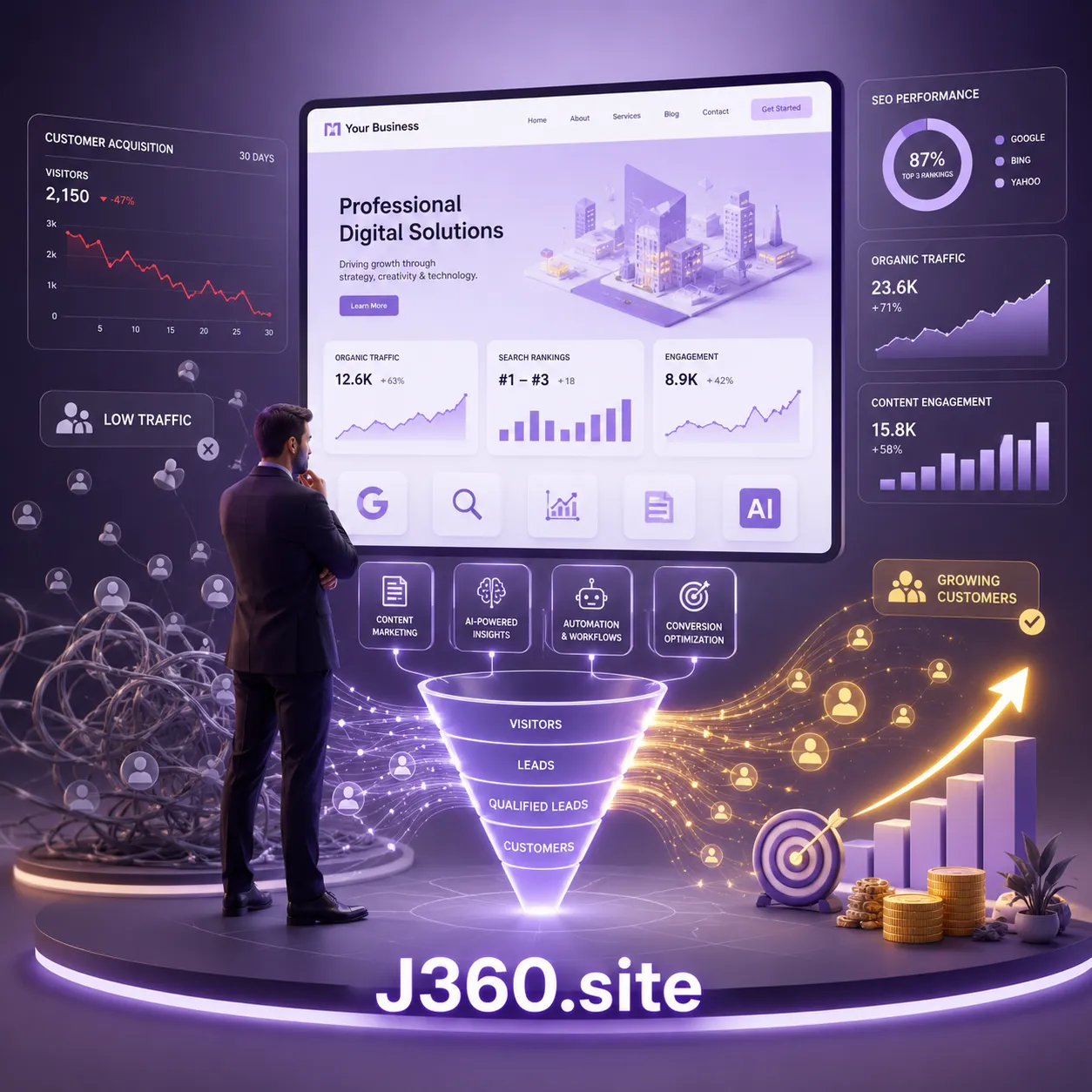
Businesses now need a complete digital ecosystem that combines SEO, website design, content marketing, artificial intelligence, and conversion optimization.
Without an effective Customer Acquisition Strategy, even the best businesses can struggle to generate consistent growth.
2. Why Having a Great Product Isn’t Enough Anymore
Many entrepreneurs still believe that product quality is the single most important factor in business success.
While quality certainly matters, today’s marketplace has become far more competitive.
Customers now have access to hundreds of alternatives.
Whether they’re looking for a marketing agency, a software company, an online store, or a local service provider, they can compare businesses within minutes.
This shift has fundamentally changed the way companies compete.
Modern businesses don’t compete only through products.
They compete through:
- Visibility
- Brand identity
- Customer experience
- Digital marketing
- Website quality
- Trust
- Reputation
Imagine two companies offering exactly the same service.
The first company has an outdated website, limited online visibility, and almost no content.
The second company has a professional website, strong SEO, valuable content, and an active digital presence.
Which company will customers trust?
The answer is obvious.
People naturally associate professionalism with credibility.
This is why businesses that invest in their digital presence often outperform competitors with similar products.
Your product may solve a customer’s problem.
But before customers can experience your solution, they first need to discover your business.
Visibility creates opportunities.
Trust creates confidence.
Customer experience creates conversions.
And together, these elements create growth.
3. The Hidden Reasons Your Business Is Losing Potential Customers
Many businesses lose customers without realizing it.
Potential customers rarely send an email explaining why they decided not to buy.
They don’t complete a survey.
They don’t explain why they chose a competitor.
They simply leave.
Understanding why customers disappear is one of the most important aspects of business growth.
Your Business Is Difficult to Find
The first reason is surprisingly simple.
People can’t buy from businesses they can’t find.
If your website isn’t visible on search engines, you’re automatically losing potential customers.
Visibility is no longer optional.
It’s a necessity.
Your Brand Doesn’t Create Trust
Trust influences every purchasing decision.
Customers often ask themselves:
- Is this company legitimate?
- Can I trust this business?
- Do they have experience?
- Have they helped other customers?
If your digital presence doesn’t answer these questions, visitors will continue searching elsewhere.
Your Messaging Is Unclear
Customers should immediately understand:
- What your business offers
- What problems you solve
- Why you’re different
- Why they should choose you
Confusing messages create uncertainty.
And uncertainty prevents conversions.
You’re Ignoring the Customer Journey
Many businesses focus exclusively on sales.
However, customers need information before they’re ready to buy.
Your digital strategy should support every stage of the customer journey, including:
- Awareness
- Research
- Comparison
- Decision-making
- Conversion
Businesses that understand customer behavior build stronger relationships and generate better results.
4. Does Your Website Help You Gain Customers or Drive Them Away?
Your website is often the first interaction customers have with your business.
Think of it as your digital storefront.
Would you invite customers into a physical store that looked outdated, unorganized, and difficult to navigate?
Probably not.
Yet many businesses expect customers to stay on websites that create exactly that experience.
A website should accomplish several important objectives simultaneously.
It should:
- Build trust
- Communicate value
- Educate visitors
- Generate leads
- Support conversions
Unfortunately, many websites fail in all five areas.
First Impressions Happen Within Seconds
Studies consistently show that users form opinions about websites almost immediately.
Before visitors read your content, they’re already evaluating:
- Design quality
- Visual appearance
- Layout
- Navigation
- Professionalism
Your design directly influences credibility.
User Experience Matters More Than Ever
Modern customers expect seamless experiences.
They want to find information quickly.
They expect simple navigation.
They want clear answers.
Poor user experiences create frustration, and frustrated users rarely become customers.
Mobile Optimization Is No Longer Optional
More users browse the internet on smartphones than on desktop computers.
If your website isn’t fully optimized for mobile devices, you’re creating unnecessary barriers between your business and potential customers.
Your Website Should Generate Results
A website shouldn’t simply exist.
It should actively contribute to business growth.
Your website should function as:
- A marketing platform
- A lead-generation tool
- A sales representative
- A communication channel
If it isn’t accomplishing these goals, it’s time for improvements.
5. Why a Weak Online Presence Is Holding Your Business Back
Your website is only one part of your digital presence.
Customers interact with businesses across multiple channels.
Your online presence includes:
- Your website
- Search engines
- Social media
- Business directories
- Review platforms
- Blog content
- Email marketing
Every digital touchpoint influences customer perception.
An inconsistent online presence sends mixed signals.
Imagine a potential customer discovering your website and then checking your social media accounts.
What happens if your last post was published two years ago?
What happens if your website looks modern but your Google Business profile contains outdated information?
These inconsistencies create doubt.
A strong online presence creates the opposite effect.
It demonstrates professionalism.
It builds authority.
It increases visibility.
And most importantly, it helps businesses remain competitive.
Your online presence has become your digital reputation.
Ignoring it can significantly limit your growth potential.
6. The Most Common Website Mistakes That Cost Businesses New Customers
Many businesses don’t need a completely new website.
They simply need to fix several critical mistakes.
Slow Website Speed
Users expect websites to load quickly.
Even a few seconds of delay can dramatically increase bounce rates.
Common causes include:
- Large image files
- Poor hosting
- Unoptimized code
- Excessive plugins
Poor Mobile Performance
A website that doesn’t work properly on smartphones will lose visitors.
Responsive design is no longer a luxury.
It’s a requirement.
Weak Calls to Action
Customers need clear instructions.
If your website doesn’t tell visitors what to do next, they’ll leave.
Strong calls to action include:
- Request a quote
- Schedule a consultation
- Contact our team
- Get started
Complicated Navigation
People shouldn’t have to search for important information.
Simple navigation improves the user experience and encourages visitors to explore more pages.
Generic Content
Customers don’t want to read marketing jargon.
They want useful information.
Your content should answer questions and solve problems.
Missing Trust Signals
Trust signals include:
- Customer testimonials
- Reviews
- Certifications
- Awards
- Case studies
These elements reassure visitors and increase credibility.
Every small improvement removes another obstacle between your business and potential customers.
7. Why Your Business Isn’t Showing Up on Google
One of the most frustrating experiences for business owners is searching for their own company on Google and realizing that their website is almost impossible to find.
Many people assume that once a website is published, Google will automatically start sending visitors.
Unfortunately, that’s not how search engines work.
Google evaluates millions of websites every day and determines which pages deserve to appear in search results.
If your website isn’t ranking, several factors may be responsible.
You’re Targeting the Wrong Keywords
Keywords are the foundation of every successful SEO strategy.
Many businesses make one of two mistakes:
- They target extremely competitive keywords.
- They target keywords that their customers never search for.
Effective keyword research helps businesses understand:
- Customer behavior
- Search trends
- Search intent
- Market opportunities
Instead of guessing what your audience wants, keyword research provides data that allows you to build content around actual customer searches.
Your Content Doesn’t Match Search Intent
Google’s primary goal is to provide users with the most useful and relevant information.
If someone searches for a solution and lands on a page that focuses only on selling, they will probably leave.
Modern SEO isn’t about inserting keywords into content as many times as possible.
It’s about creating content that answers questions and provides value.
Your content should:
- Educate
- Inform
- Solve problems
- Provide practical solutions
Businesses that consistently publish valuable content usually perform much better in search results.
Your Website Has Technical SEO Problems
Even excellent content can struggle if technical issues prevent search engines from understanding your website.
Some of the most common technical SEO problems include:
- Slow page speed
- Broken links
- Duplicate content
- Missing title tags
- Poor website architecture
- Weak internal linking
- Poor mobile optimization
Technical SEO often works behind the scenes, but its impact on search visibility can be enormous.
You’re Not Building Authority
Google doesn’t simply rank content.
It ranks authority.
Websites that consistently demonstrate expertise and provide valuable information gradually build authority within their industry.
Authority is influenced by:
- Content quality
- Backlinks
- User experience
- Brand recognition
- Website performance
SEO is not a short-term campaign.
It’s a long-term growth strategy that continues delivering results long after the initial work has been completed.
8. How SEO Helps Businesses Attract Consistent, High-Quality Customers
Unlike paid advertising, SEO doesn’t stop producing results when your budget runs out.
That’s one of the biggest reasons businesses continue investing in search engine optimization.
SEO attracts customers who are already searching for solutions.
These visitors aren’t randomly discovering your business.
They’re actively looking for answers.
This makes them much more likely to become paying customers.
SEO Increases Visibility
If your business appears on the first page of Google, more potential customers will discover your brand.
Higher visibility creates more opportunities.
More opportunities create more leads.
And more leads create more revenue.
SEO Improves Lead Quality
Traffic alone isn’t enough.
A thousand irrelevant visitors won’t help your business grow.
SEO focuses on attracting qualified visitors who are genuinely interested in your products or services.
This often leads to:
- Better engagement
- Higher conversion rates
- Lower acquisition costs
SEO Builds Credibility
Customers naturally trust businesses that appear near the top of search results.
High rankings create a sense of authority.
People often assume that businesses appearing on the first page are more reliable, more experienced, and more established.
SEO Supports Long-Term Growth
Paid advertising provides immediate visibility.
SEO provides sustainable growth.
A well-optimized article can continue generating traffic for months or even years.
This makes SEO one of the most cost-effective digital marketing strategies available.
Successful SEO strategies typically include:
- Keyword research
- On-page optimization
- Technical SEO
- Content creation
- Link building
- Performance analysis
The goal isn’t simply to rank higher.
The goal is to connect your business with customers who are already searching for your solutions.
9. The Role of Content Marketing in Building Customer Trust
Customers don’t buy products.
They buy confidence.
Before making a purchasing decision, people want answers.
They want information.
They want reassurance.
Content marketing allows businesses to provide all three.
Every blog post, guide, tutorial, case study, and educational resource creates another opportunity to build trust.
Content Positions Your Business as an Industry Expert
People trust experts.
When your website consistently publishes useful information, customers begin to view your business as a reliable source.
This transforms your brand from a service provider into a trusted authority.
Content Helps Customers Make Better Decisions
Most customers spend time researching before making a purchase.
They ask questions such as:
- Which solution is right for me?
- How much will this cost?
- What are my options?
- Which company should I choose?
Content answers these questions.
And businesses that provide answers often earn customer trust.
Content Strengthens Your SEO Strategy
Content marketing and SEO work together.
Every article creates another opportunity to target important keywords and increase search visibility.
The more valuable content you publish, the more opportunities you create for customers to discover your business.
Content Creates Long-Term Value
Advertisements disappear.
Social media posts lose visibility.
High-quality content continues working.
A single article can generate traffic, leads, and conversions long after it’s published.
This is why content marketing remains one of the most powerful tools for customer acquisition.
Some of the most effective content formats include:
- Blog articles
- Industry reports
- Case studies
- FAQs
- Tutorials
- Comparison guides
Businesses that invest in content aren’t simply creating articles.
They’re building relationships.
10. How Artificial Intelligence Is Changing Customer Acquisition in 2026
Artificial intelligence is no longer an experimental technology.
It’s becoming an essential part of modern business.
Companies across every industry are using AI to improve marketing, analyze customer behavior, automate processes, and increase efficiency.
AI Improves Customer Insights
One of the greatest strengths of artificial intelligence is its ability to analyze large amounts of data.
AI can identify patterns that humans might overlook.
Businesses can use AI to analyze:
- Customer behavior
- Search trends
- Purchase history
- Website interactions
- User preferences
These insights allow companies to make smarter decisions.
AI Makes Marketing More Personalized
Customers expect personalized experiences.
Generic marketing campaigns are becoming less effective.
AI helps businesses create personalized:
- Email campaigns
- Product recommendations
- Website experiences
- Advertising campaigns
Personalization improves customer satisfaction and increases engagement.
AI Automates Repetitive Tasks
Many marketing activities require significant time and effort.
AI can automate tasks such as:
- Content research
- Customer support
- Data analysis
- Email automation
- Lead qualification
Automation allows businesses to focus on strategy rather than repetitive processes.
AI Supports Better Decision-Making
The future of marketing belongs to businesses that can quickly analyze information and adapt to changing customer behavior.
Artificial intelligence provides the tools needed to make faster and more informed decisions.
However, AI isn’t replacing human creativity.
The most successful companies combine:
Human expertise + AI technology + data-driven strategies.
11. Turning Website Visitors Into Paying Customers: The Power of Conversion Optimization
Many businesses focus entirely on increasing website traffic.
But traffic doesn’t automatically generate sales.
Imagine receiving 10,000 monthly visitors while only 1% become customers.
Now imagine receiving 5,000 visitors while 5% convert.
The second scenario produces significantly better results.
This is why conversion optimization is so important.
What Is Conversion Optimization?
Conversion optimization is the process of improving your website to encourage visitors to take specific actions.
These actions may include:
- Completing a contact form
- Scheduling a consultation
- Downloading a guide
- Subscribing to a newsletter
- Making a purchase
Your Value Proposition Must Be Clear
Visitors should immediately understand:
- What you offer
- Why it matters
- Why you’re different
Unclear messaging creates confusion.
Clear messaging increases conversions.
Calls to Action Influence Customer Behavior
Many businesses underestimate the importance of CTAs.
Strong CTAs encourage action.
Examples include:
- Get a Free Consultation
- Request a Quote
- Schedule a Meeting
- Start Your Project
Without a clear CTA, visitors often leave without taking action.
Trust Signals Increase Conversions
Trust influences every stage of the customer journey.
Your website should include:
- Customer reviews
- Testimonials
- Success stories
- Certifications
- Case studies
Trust reduces uncertainty.
And reduced uncertainty increases conversions.
Conversion Optimization Is a Continuous Process
Successful businesses continuously test and improve their websites.
They analyze:
- Conversion rates
- User behavior
- Landing pages
- Website performance
Small improvements often produce significant results.
Attracting visitors is only the first step.
Turning those visitors into paying customers is what truly drives business growth.
12. A Step-by-Step Strategy to Fix Your Customer Acquisition Process
Understanding why your business isn’t attracting enough customers is important, but understanding the problem isn’t enough.
You also need a practical strategy that turns insights into measurable results.
Many businesses make the mistake of trying to fix everything at once.
They redesign their website, launch multiple marketing campaigns, start posting on social media every day, and invest in paid advertising simultaneously.
Unfortunately, this approach often creates confusion instead of growth.
The most effective strategy is to improve your customer acquisition process step by step.
Step 1: Identify the Biggest Obstacle
Before making any changes, determine where your business is losing customers.
Ask yourself the following questions:
- Are customers finding your business?
- Are visitors staying on your website?
- Are people contacting you?
- Are visitors becoming leads?
- Are leads becoming paying customers?
Most customer acquisition problems fall into one of these three categories:
- Visibility problems
- Trust problems
- Conversion problems
Finding the root cause prevents you from wasting time and money on ineffective solutions.
Step 2: Analyze Your Website
Your website should be the center of your digital strategy.
Conduct a complete website audit and evaluate:
- Loading speed
- Mobile responsiveness
- User experience
- Navigation
- Content quality
- Calls to action
- Technical performance
Try to view your website through the eyes of a potential customer.
Can visitors immediately understand what you do?
Can they easily find your services?
Can they quickly contact your team?
If the answer is no, improvements are necessary.
Step 3: Improve Your SEO Strategy
SEO should never be treated as an afterthought.
If customers can’t find your website, they can’t become customers.
A successful SEO strategy should include:
- Keyword research
- Technical SEO
- On-page optimization
- Local SEO
- Internal linking
- Content optimization
Remember that SEO isn’t about ranking for every possible keyword.
It’s about ranking for the right keywords.
Step 4: Create Valuable Content
Content should solve problems rather than simply promote products.
Customers appreciate businesses that educate them.
Instead of constantly talking about your services, focus on answering questions your audience is already asking.
Create content such as:
- Blog articles
- Industry guides
- Tutorials
- Case studies
- Comparison articles
Useful content strengthens your authority while improving your visibility on search engines.
Step 5: Optimize the Customer Journey
The customer journey should feel simple and intuitive.
Reduce unnecessary steps.
Simplify your contact forms.
Improve your navigation.
Create stronger calls to action.
Small improvements can significantly increase conversion rates.
Step 6: Track Results and Continue Improving
Customer acquisition isn’t a one-time project.
It’s an ongoing process.
Successful businesses continuously analyze performance, identify weaknesses, and make improvements.
Growth doesn’t happen overnight.
It happens through consistent optimization and continuous improvement.
13. How Jarvis360 Builds Websites and SEO Strategies That Generate More Customers
At Jarvis360, we believe that successful digital marketing begins with understanding one fundamental truth:
Businesses don’t need more traffic. They need more customers.
This philosophy influences every service we provide.
Many agencies treat website design, SEO, content marketing, and AI as completely separate services.
We take a different approach.
We combine them into a single growth-focused strategy.
We Build Websites That Support Business Goals
A website should do much more than look attractive.
It should help businesses achieve measurable objectives.
When designing websites, we focus on:
- Performance
- User experience
- Mobile responsiveness
- Conversion optimization
- Search engine visibility
Every design decision should support business growth.
Beautiful websites are valuable.
But beautiful websites that generate leads are even more valuable.
Our SEO Strategies Focus on Sustainable Growth
Short-term traffic spikes don’t create long-term success.
That’s why our SEO strategies focus on building a strong foundation.
Our process includes:
- Keyword research
- Technical optimization
- On-page SEO
- Content development
- Competitor analysis
- Performance monitoring
Rather than chasing temporary rankings, we focus on creating sustainable growth opportunities.
We Use AI to Improve Efficiency
Artificial intelligence has transformed digital marketing.
At Jarvis360, we use AI to improve:
- Content strategies
- Customer analysis
- Market research
- Workflow automation
- Marketing efficiency
Technology allows businesses to make smarter decisions.
However, technology works best when combined with human creativity and strategic thinking.
We Focus on Results, Not Assumptions
Every strategy should be supported by data.
We continuously analyze important performance indicators, including:
- Website traffic
- Search visibility
- Conversion rates
- User engagement
- Lead generation
This allows us to identify opportunities and make informed decisions.
Because successful marketing isn’t based on assumptions.
It’s based on measurable results.
14. Measuring Success: The Key Metrics Every Business Should Track
Without measurement, growth becomes almost impossible.
Many businesses invest in marketing without tracking performance.
As a result, they don’t know which strategies are working and which strategies are wasting resources.
Data provides clarity.
And clarity leads to better decisions.
Organic Traffic
Organic traffic measures how many visitors find your website through search engines.
An increase in organic traffic often indicates that your SEO strategy is improving.
Conversion Rate
Your conversion rate measures how many visitors complete a specific action.
Examples include:
- Completing a contact form
- Scheduling a consultation
- Making a purchase
- Subscribing to a newsletter
Conversion rates often reveal whether your website is effectively turning visitors into customers.
Bounce Rate
Bounce rate measures how many visitors leave your website without exploring additional pages.
A high bounce rate may indicate problems such as:
- Slow loading speeds
- Weak content
- Poor user experience
- Confusing navigation
Customer Acquisition Cost
Understanding how much money you spend to acquire each customer is essential.
This metric helps businesses evaluate the efficiency of their marketing investments.
Return on Investment
ROI remains one of the most important business metrics.
If your marketing campaigns aren’t generating profitable results, your strategy needs adjustment.
Successful businesses don’t rely on guesswork.
They measure.
They analyze.
And they improve.
15.Conclusion: Build a Customer-Focused Digital Strategy That Delivers Long-Term Growth
Attracting customers in 2026 requires much more than having a great product.
Today’s customers expect businesses to provide exceptional digital experiences.
They expect:
- Professional websites
- Valuable content
- Strong search visibility
- Fast and responsive platforms
- Personalized experiences
- Trust and credibility
Businesses that fail to adapt to these expectations often struggle to grow.
Throughout this article, we’ve explored several factors that influence customer acquisition, including:
- Website design
- SEO
- Content marketing
- Artificial intelligence
- Conversion optimization
- Customer trust
- Performance measurement
The most important lesson is that these elements shouldn’t be treated as separate strategies.
They should work together as part of a complete customer acquisition system.
Your website should attract visitors.
Your content should educate them.
Your SEO strategy should increase visibility.
Your brand should build trust.
And your conversion strategy should transform visitors into paying customers.
Business growth doesn’t happen by accident.
It happens when businesses create systems that consistently generate opportunities.
If your company isn’t attracting enough customers today, don’t see it as a failure.
See it as an opportunity to improve.
An opportunity to strengthen your online presence.
An opportunity to create a better customer experience.
And an opportunity to build a digital strategy that delivers consistent growth, stronger customer relationships, and long-term business success.
Because in today’s competitive marketplace, the businesses that succeed won’t necessarily be the ones with the biggest budgets.
They’ll be the businesses that create the strongest connections with their customers.